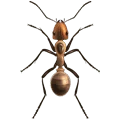
Service · Ant treatmentMedium riskMonomorium pharaonis, Solenopsis invicta, Camponotus spp.
Ant Control across the UAE
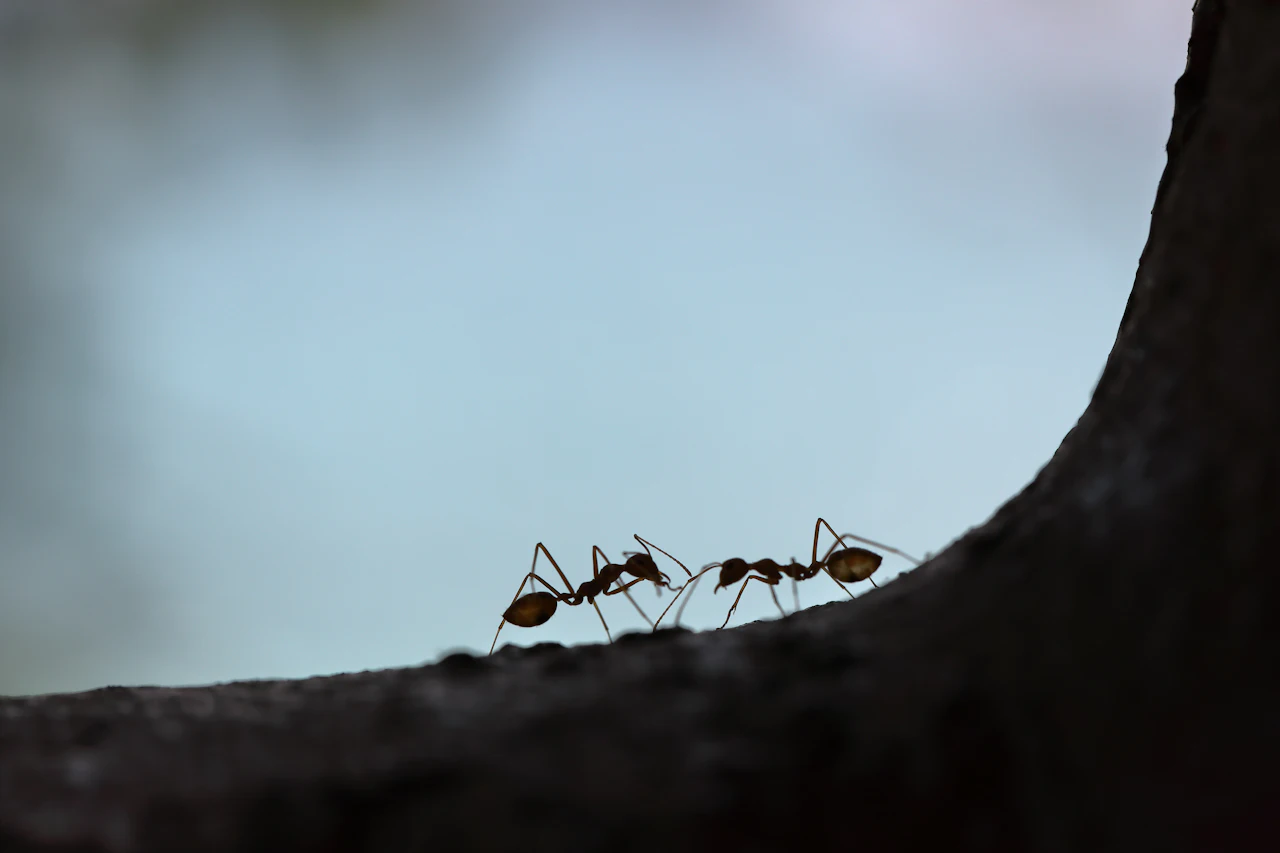
Persistent colony pests ranging from harmless little black ants to dangerous fire and samsum stingers across UAE villas, gardens and kitchens. 6-month pest-free guarantee.
Monomorium pharaonis, Solenopsis invicta, Camponotus spp.
Active · Active indoors year-round; outdoor peak March–November, Fire ant mounds surface most after winter rain (Dec–Feb)
Ants are the most-misdiagnosed pest in UAE homes — most clients call us for 'a few ants in the kitchen' without realising six different species can produce that single line of insects, each needing a fundamentally different treatment. The samsum ant (local, with a sting comparable to a wasp) and the invasive fire ant (recently established in parts of Dubai) cause genuine medical emergencies for allergic individuals. The pharaoh ant is the silent disaster of UAE hospitals, clinics and shared apartment blocks because its tiny yellow workers thread between operating rooms and food trays, carrying MRSA and Salmonella. Carpenter ants quietly carve nesting galleries inside skirting boards and wooden door frames, weakening the structure year after year. The pavement and little black ants are the ones most homeowners actually see — annoying but low-risk. The wrong product on the wrong species makes the problem worse: spraying a pharaoh ant colony triggers it to 'bud' into multiple satellite nests, multiplying your infestation overnight. PestMan starts with species identification, then deploys species-specific gel bait, residual treatment of garden trails and entry sealing, all backed by a 6-month pest-free guarantee with unlimited free call-outs.
Local UAE species with a severe sting comparable to a wasp
Reddish-brown, 6–8 mm, often nests in garden walls and rockeries
Aggressive when nest is disturbed — defends with multiple stingers
Triggers anaphylactic shock in allergic individuals — A&E visits are common
Fire Ant
02
Recent invader in Dubai gardens — bright reddish-copper, 3–6 mm
Burning, blistering sting that lasts 24–48 hours
Builds soft sandy mounds in lawns and irrigation borders
Potential for anaphylaxis; multiple stings risk hospitalisation for children
Pavement Ant
03
Dark brown to black, 2.5–4 mm, with two spines on the back
Nests under villa foundations, pavement slabs and driveway joints
Marches in well-defined trails to crumb sources and pet food
No medical risk but contaminates exposed food and biscuit tins
Pharaoh Ant
04
Yellow-brown, near-transparent, just 2 mm — easily missed
Multiple queens per colony; spraying causes the nest to bud and multiply
Tracked through UAE hospitals — carries MRSA, Salmonella and Streptococcus
Threads through wall voids, electrical conduits and false ceilings
Carpenter Ant
05
Largest UAE ant — black to dark red, 6.7–25.4 mm
Carves smooth galleries inside wooden door frames, skirting and roof timbers
Doesn't eat the wood — discards it as fine sawdust ('frass') below the nest
Long-term structural damage rivals (and is often misdiagnosed as) termite damage
Little Black Ant
06
Shiny jet-black, just 1–2 mm — the smallest UAE pest ant
Colonies have multiple queens that split into satellite nests easily
Sneaks for sugar, honey, dates and crumbs in shared kitchens
Harmless medically but forms enormous trails that overwhelm a pantry
How it works
Our treatment process
01
Species ID & Trail Mapping
Confirm whether you have samsum, fire, pharaoh, carpenter, pavement or little black ant — and trace each trail back to its nest or entry route.
02
Species-Specific Bait Plan
Match the right formulation — protein for fire/samsum, sweet for pharaoh/little black, oil-based for carpenter — at the points your colony actually visits.
03
Treatment & Sealing
Apply gel bait, mound drench or wood-void dust as needed, then seal entry routes so the colony can't re-establish from the garden.
04
Follow-up & 6-Month Warranty
Free re-visit at day 14 to confirm the queen is dead and the trail has collapsed, plus unlimited free call-outs across 180 days.
Service tiers
Our ant services
01
Residential
Apartment and villa programmes covering kitchen ants, garden mounds, wooden frame inspections and lawn fire-ant clearance — 6-month pest-free guarantee.
02
Commercial
Hospitals, clinics, restaurants and office towers — specialised pharaoh-ant protocols with non-repellent baits, audit-ready documentation and quarterly follow-up plans.
03
Emergency 24/7
Same-day deployment for severe fire-ant or samsum-ant garden infestations — critical for villas with children, allergic family members or upcoming outdoor events.
ant control guide
Everything you should know
A short, honest field guide — what we look for, how we treat, and how to keep them out for good.
How to identify them
Samsum: reddish-brown, 6–8 mm, aggressive sting — usually in garden walls
Fire ant: bright reddish-copper, 3–6 mm, soft sandy mounds in lawns
Pharaoh: tiny near-transparent yellow, 2 mm, runs along skirting in hospitals and apartments
Carpenter: large 6.7–25.4 mm black/red, fine sawdust below wooden frames
Pavement: dark brown, 2.5–4 mm, trails out of paving cracks
Little black: 1–2 mm shiny black, dense single-file trails to sugar sources
Signs of infestation
A single-file trail returning to the same skirting board or paving crack every day
Small piles of fine sawdust below wooden door frames (carpenter ant frass)
Soft mound of disturbed sand in the lawn after a sprinkler cycle (fire ant)
Tiny yellow specks running along hospital corridors or apartment kitchens (pharaoh)
Children reporting a burning sting after walking on the lawn barefoot (fire/samsum)
Sudden mass swarm of winged ants in spring — that's the colony reproducing
Health & safety risks
Samsum and fire ant stings can trigger anaphylactic shock requiring emergency adrenaline
Multiple fire ant stings in children cause fever, blistering and overnight hospital observation
Pharaoh ants spread MRSA, Salmonella, Streptococcus and Pseudomonas between hospital wards
Contamination of exposed food and infant feeding equipment by trailing workers
Carpenter ant infestations weaken wooden roof beams and door frames — structural risk
Allergic reactions in pets — fire ant stings on cats and small dogs are particularly severe
Where you'll find them
Lawn edges, garden walls and rockeries (samsum, fire ant)
Hospital corridors, clinic prep rooms and shared apartment risers (pharaoh)
Wooden door frames, window sills and skirting boards (carpenter)
Cracks in driveways, patios and pavement joints (pavement)
Kitchen sugar bowls, biscuit jars and pet food bowls (little black, pavement)
AC condensate lines and weep holes in villa exterior walls (multiple species)
Under villa palm trees, irrigation borders and mulched flower beds
When they're active
Active indoors year-round; outdoor peak March–November
Fire ant mounds surface most after winter rain (Dec–Feb)
Pharaoh ants accelerate inside heated buildings during cooler months
Carpenter ant winged swarms emerge on humid spring evenings (April–May)
Our treatment approach
Species identification first — six UAE ants need six different bait formulations
Gel bait placement on active trails so workers carry the active back to the queen
Insect Growth Regulator (IGR) added to bait to sterilise multi-queen pharaoh colonies
Residual perimeter spray on garden walls, driveways and villa foundations
Targeted dust treatment inside wooden frame voids for carpenter ant galleries
Mound drench with safe pyrethroid for fire ant nests in lawns
Sealing of expansion joints, weep holes and cable penetrations to block re-entry
Prevention tips
Store sugar, dates, honey, baby formula and pet treats in sealed glass or thick plastic — paper bags and ziplocks are not ant-proof
Wipe sticky residue off counter tops and pet food bowls before bed each night
Trim back garden plants and palm fronds touching the villa wall — they're ant bridges
Seal AC penetrations, weep holes and cable entries with steel wool and silicone
Inspect wooden door frames and skirting in April–May for fresh sawdust piles (carpenter ant warning)
Walk children's lawn play areas before they go barefoot during humid mornings (fire ant check)
Prep & aftercare
Before & after your service
Before your visit
Do NOT sweep or wipe away visible ant trails before the technician arrives — we follow them back to the nest
Leave any small food crumbs on the trail that the workers are carrying — it tells us the colony's diet preference
Move sealed and unsealed food (sugar, dates, honey) off open shelves into the fridge for the visit
Switch off garden sprinklers the morning of the visit so mounds and trails stay visible
Brief children and gardeners on which areas the technician will treat so they avoid them for 4 hours
Do not apply DIY ant spray in the 72 hours before our visit — it scatters the colony and budges pharaoh nests
After your service
Expect to see MORE ants — not fewer — for 24–48 hours after gel bait is placed; this is the colony emerging to feed and is exactly what we want
Do NOT spray the bait dots, even if it looks like the ants are 'getting away with it' — they need to return to the queen alive
Trails should collapse fully by day 7–10; isolated stragglers up to day 21 are normal
Do not wash baited skirting, wall corners or garden entry points for 14 days
Empty pet food bowls overnight for the first 30 days so ants are forced to the bait, not your dog's biscuits
Report fresh trails or new mounds via WhatsApp — free top-ups under the 180-day warranty
The questions we hear most about ant control jobs in the UAE.
Why are pharaoh ants a serious problem in UAE hospitals — and what makes them harder to kill than other ants?
Pharaoh ants are 2 mm yellow-brown workers that thread along skirting and electrical conduits between operating rooms, NICUs, pharmacies and patient meal trays — sampling everything they touch. Studies from UAE and GCC hospitals have isolated MRSA, Salmonella, Streptococcus and Pseudomonas from their bodies. What makes them uniquely hard to kill is colony structure: a single nest contains multiple queens, and stress (any sprayed insecticide, even a fragrance plug-in) triggers 'budding' — the queens split off with workers and form new satellite colonies in different parts of the building. Conventional sprays therefore multiply the problem. The only effective approach is non-repellent IGR-laced sugar bait that the workers carry back to every queen, sterilising the colony from within over 4–6 weeks. We co-ordinate with facilities management to apply this across the building simultaneously.
My child stepped on a fire ant nest and has multiple burning blisters — what should I do right now?
Move them indoors and brush off any remaining ants quickly with a dry cloth — water spreads them. Wash the bites with cool soapy water and apply a cold compress for 10 minutes. Give an age-appropriate oral antihistamine (cetirizine or loratadine) and apply 1% hydrocortisone cream to the blisters; do NOT pop the pustules — that's how scarring and secondary infection happen. Go straight to A&E if you see swelling spreading away from the bite site, hives elsewhere on the body, vomiting, difficulty breathing or any throat/tongue swelling — that's anaphylaxis and needs adrenaline. Once they're stable, call us same-day; we'll mound-drench the fire ant nest before another family member is stung. We keep a 24/7 emergency line specifically for this scenario.
How do I tell carpenter ant damage from termite damage in a wooden door frame?
Carpenter ants carve galleries but do not eat the wood — they discard it as fine sawdust ('frass') in small piles below the nest opening. The galleries inside have a smooth, sandpapered appearance and never contain mud. Termites do eat the wood; their galleries are packed with damp mud-and-faeces tubes ('shelter tubes') visible on the wood surface and along skirting, and you'll rarely see live workers without breaking the surface. Tap the wood: termite-damaged wood sounds hollow and softens against a screwdriver; carpenter-damaged wood is firmer but has clean linear channels when split. If you find sawdust piles WITHOUT mud tubes, it's almost certainly carpenter ants. We bring an inspection kit to confirm before recommending treatment because the two species need completely different products.
Why does the same ant trail keep coming back to the same spot on my kitchen counter even after I clean it?
Worker ants lay an invisible pheromone trail as they walk between food and nest — like an invisible chemical highway. Soap and water remove crumbs but not the pheromone marker, so the next shift of foragers follows the same route to where the last scout reported food. Until that pheromone is broken AND the colony is killed, the trail re-appears within hours. White vinegar (a 50:50 dilution wiped along the trail) disrupts pheromones short-term but only delays the next wave. The real fix is gel bait placed on the trail so the workers take the active back to the queen — once she dies, foraging stops within 5–10 days and the pheromone fades naturally. That's why our gel-bait approach delivers six months of clearance while DIY spray-and-wipe gives you four days.
I bought red gel bait but the ants ignore it — does the colour or brand really matter?
Colour is irrelevant to ants — they're effectively colour-blind in the human sense. What matters is the active ingredient AND the food matrix matching what your specific species wants right now. Ants alternate between sugar-craving phases (when raising larvae) and protein-craving phases (when the queen is laying), and a colony will completely ignore a sugar bait during a protein week. Professional pest control kits carry three matrices — sweet (sucrose-based), protein (meat/egg-based) and oil-based (peanut/almond) — and we offer all three on adjacent cards during the inspection so the workers pick the one they want. If the workers take the bait within 30 minutes, we know it's the right matrix. If they ignore it, we change to the next one. That's why one DIY box from a supermarket fails — it offers only one matrix that's wrong for the colony cycle.
Do you treat the garden as well as inside the house — or is one enough?
For most ant species (especially samsum, fire ant, pavement and carpenter) the colony lives outdoors and the indoor trail is just a foraging excursion. Treating only the kitchen kills the workers you saw but leaves the queen and 95% of the colony to send a fresh trail next week through a different crack. Our standard residential package therefore covers indoor gel-bait at the visible trail PLUS outdoor perimeter spray on the villa foundations, mound drench on any fire ant nests in the lawn, and barrier residual on garden walls. Apartments without a private garden still get an indoor + main entry treatment because the colony often lives in a shared building wall. The 6-month guarantee is conditional on doing both layers — indoor-only single-visit jobs are available but we capped the warranty at 60 days because we know they'll come back faster.
Will the treatment make my dog's food bowl unsafe — and how do I keep ants out of pet food long-term?
No — we never place gel bait inside or adjacent to pet food and water bowls, and the active ingredients we use (Fipronil, Indoxacarb, Imidacloprid at residential gel concentrations) bind to surfaces and are not airborne, so there's no contamination risk to your pet's bowl 1 m away. The bigger long-term issue is that pet food is one of the strongest ant attractants in a UAE villa: kibble has the right fat, protein and salt profile for fire ants, pavement ants and pharaoh ants simultaneously. The fix is a 'moat' bowl — a wide shallow water-filled tray with the pet's actual bowl sitting in the centre on a smaller stand. Ants can't swim the moat. Empty and refill the water daily. We supply moat-bowl kits to families with pets free with any villa treatment.
When a swarm of winged ants suddenly fills the room — is that a sign of a much bigger nest?
Yes — but the good news is it's also the easiest moment to find and exterminate the colony. Those winged ants are 'alates' — sexually mature future kings and queens released by a mature colony for a single mass-mating flight, usually triggered by a specific combination of humidity, temperature and barometric pressure (April–May humid evenings in the UAE for carpenter ants; varies by species). The fact that you saw them indoors means the colony is INSIDE the building, not just visiting from the garden. Don't kill them with a vacuum or spray and then walk away — call us within 24 hours. We can usually find the parent nest within a 2 m radius of where the alates emerged, treat directly into the wall void or skirting, and eliminate the colony in a single visit. Wait a week and the alates have flown out to start new nests across the neighbourhood.