Service · Mosquito treatmentHigh riskAedes aegypti, Culex quinquefasciatus
Mosquito Control across the UAE
Disease-carrying mosquitoes that breed in stagnant water across UAE villas, gardens and hotels. Long-term protection via a recurring 1–3 month treatment cycle.
Active · Year-round in irrigated areas, but population peaks October–April when residents spend evenings outdoors, Summer breeding intensifies in shaded courtyards even at 40°C+ daytime temperatures
Mosquitoes are unlike most other pests because outdoor source-pressure never stops in the UAE — every drip pan under an AC unit, plant saucer, decorative fountain, garden bird-bath and construction puddle becomes a breeding pool within 4 days. Two species dominate: Aedes (the black-and-white-marked day biter that transmits dengue and Zika) and Culex (the urban night-biter that transmits West Nile virus). A single Aedes egg can survive dry for 8 months in a flower pot then hatch on first contact with water. This is why a one-off fogging never works for more than 2–4 weeks — fresh adults emerge from sources you can't always see. PestMan runs mosquito control as a recurring 1-to-3 month programme combining inspection of breeding sources, larvicide treatment of standing water, residual barrier spray on garden vegetation and ULV fogging at peak adult emergence — giving you long-term protection rather than a brief, expensive lull.
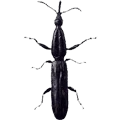
Black body with distinctive white markings on legs and thorax
Transmits dengue, Zika, chikungunya and yellow fever
Day-time biter — most active at dawn and dusk
Lays drought-resistant eggs that hatch on first water contact 8 months later
Culex Mosquito
02
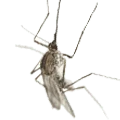
Pale brown to grey with a slender body, 4–10 mm
Primary urban mosquito — breeds in standing water around buildings
Transmits West Nile virus, lymphatic filariasis and avian malaria
Active at night — drawn to lights and human exhalations
How it works
Our treatment process
01
Breeding-Source Survey
Walk the property mapping every water source — AC drip pans, plant saucers, fountains, blocked drains, puddles — and assign a larvicide or removal plan per item.
02
Larvicide & Source Reduction
Treat unavoidable standing water (ponds, fountains, drip pans) with food-safe Bti and physically eliminate or screen the rest.
03
Adult Control & Barrier Spray
ULV fog open areas at dusk for immediate knockdown, then apply 30-day residual barrier on garden vegetation, shaded walls and outdoor furniture undersides.
04
Recurring 1–3 Month Service
Return every 4–12 weeks based on season and pressure — same technician, same routes, with a 90-day warranty between visits and free top-ups if needed.
Service tiers
Our mosquito services
01
Residential
Villa and townhouse plans built around the garden, AC drip pans, pool deck and outdoor seating — recurring every 1–3 months because mosquito source pressure never stops outdoors. 90-day warranty between visits.
02
Commercial
Bi-monthly or quarterly subscriptions for hotels, schools, labour camps, golf courses and outdoor dining venues — includes a community-health audit and Ministry of Health-aligned reporting.
03
Emergency 24/7
Same-day ULV fogging before outdoor weddings, hotel events, sports finals and Ramadan iftar gatherings — guests treated to bite-free evenings without delay.
mosquito control guide
Everything you should know
A short, honest field guide — what we look for, how we treat, and how to keep them out for good.
How to identify them
Aedes (tiger mosquito): 4–7 mm, jet-black with bright white leg bands
Culex: 4–10 mm, pale tan/brown, holds body parallel to surface when resting
Larvae ('wrigglers'): comma-shaped grubs hanging vertically from water surface
Egg rafts (Culex): tiny brown patches floating like soot on still water
Buzz-bite-buzz pattern at dusk and through the night
Signs of infestation
Itchy bites appearing in groups of 2–3 (mosquitoes feed in a 'breakfast-lunch-dinner' pattern)
Distinctive high-pitched whine near your ears at night
Buzzing clouds around outdoor lights, garden gazebos and pool decks at sunset
Wriggling larvae in plant saucers, water features and AC condensate drip trays
Mosquitoes resting on shaded walls of garden walls and under outdoor stairwells
Children's complaints of bites after late-afternoon outdoor play
Health & safety risks
Aedes mosquitoes transmit dengue fever, Zika virus and chikungunya — confirmed cases in the GCC every year
Culex mosquitoes transmit West Nile virus — flagged by UAE Ministry of Health surveillance
Allergic reactions to saliva proteins — large red welts in children and pets
Skeeter syndrome — severe localised swelling needing antihistamines and steroid cream
Sleep disruption and ear-buzz anxiety reducing productivity
Disease vectoring risk amplified in densely populated apartment blocks and labour accommodation
Where you'll find them
AC condensate drip trays and split-unit drain pans on villa walls
Plant saucers, garden pots and irrigation tray reservoirs
Decorative fountains, ornamental ponds and pool overflow gutters
Forgotten buckets, watering cans and children's toys left outdoors
Construction site puddles, blocked roof gullies and untrimmed bushes
Hotel pool deck planters and outdoor restaurant table umbrella bases
Labour camp shared toilet floors and discarded car tyres
When they're active
Year-round in irrigated areas, but population peaks October–April when residents spend evenings outdoors
Summer breeding intensifies in shaded courtyards even at 40°C+ daytime temperatures
After-rain surge — populations spike 5–7 days after any winter shower (Dec–Mar)
Construction zones, golf courses and farms drive year-round source pressure
Our treatment approach
Inspection and breeding-source mapping — every container holding > 7 days of standing water flagged
Larvicide treatment (Bti or methoprene) in ponds, water features, drip trays and storm drains
Residual barrier spray on shaded vegetation and shrub undersides where adults rest
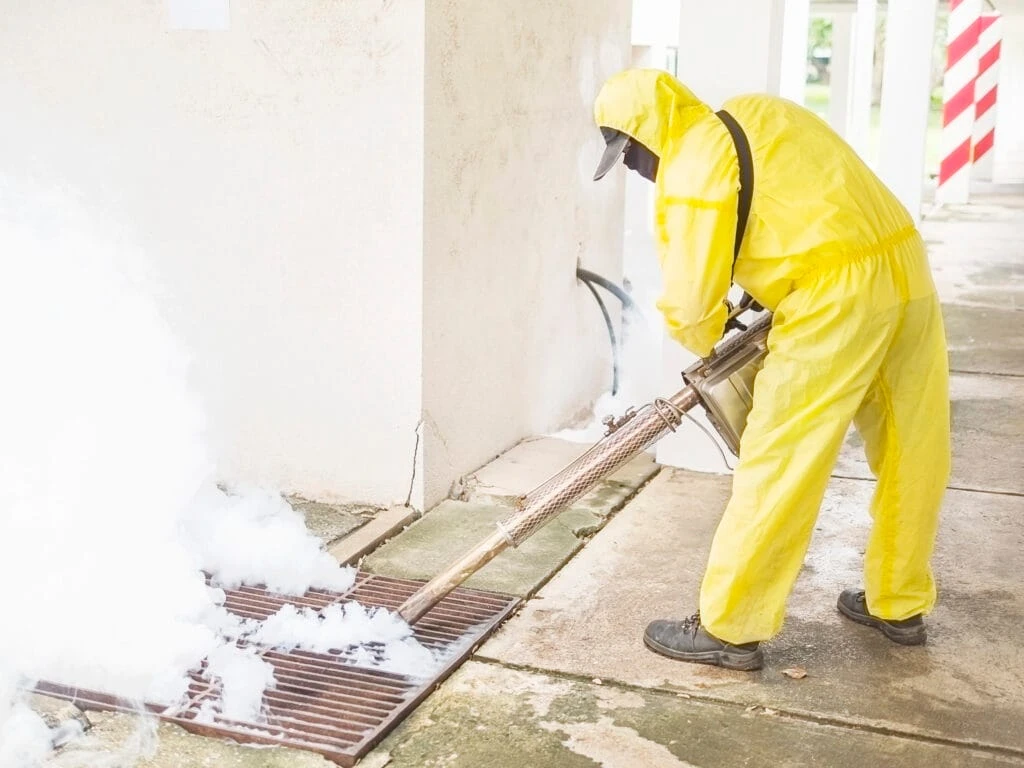
ULV thermal fogging at dusk for fast knockdown of flying adults during outdoor events
Mosquito-trap stations using CO₂ and lactic-acid lures for outdoor patios and gazebos
Recurring service every 1–3 months because breeding never stops in UAE conditions
Prevention tips
Empty plant saucers, drip pans, watering cans and pet bowls every 3–4 days without exception
Drill 2 mm holes in the bottom of AC condensate drip trays so water cannot collect
Stock decorative fountains and koi ponds with mosquito-fish (Gambusia) — they eat larvae and need no feeding
Trim hedges to allow sunlight onto the soil — Aedes won't rest in bright open areas
Install 16-mesh fly screens on windows and replace torn screens — the standard 8-mesh lets young Aedes through
Run ceiling fans on outdoor terraces during evening dining — mosquitoes can't fly in airflow above 1 m/s
Prep & aftercare
Before & after your service
Before your visit
Walk the garden the morning of the visit and empty every plant saucer, bucket and pet bowl outside
Drill or tip your AC drip pans the day before — even 50 ml of stagnant water breeds 100+ adults
Vacuum any indoor plant pot trays and check children's outdoor toys (sand buckets, paddling pools, balls with cups)
Bring outdoor pets, cages and bird-baths indoors for the duration of fogging and 2 hours after
Move children's outdoor toys and play mats indoors so they don't pick up residual barrier spray
Switch off pool/fountain pumps 15 minutes before treatment so larvicide doesn't disperse
After your service
Keep children and pets off the lawn for 2 hours after fogging and 4 hours after residual spray dries
Do NOT water the garden for 24 hours after barrier spray — the residual needs to bind to leaf surfaces
Empty drip pans, plant saucers, watering cans and bird-baths every 4 days between PestMan visits — that's the key habit that makes the programme work
Re-treatment is scheduled every 1–3 months depending on garden size, season and source density; do not skip the recurring visit even if you've stopped seeing mosquitoes — that's a sign the programme is working, not a reason to stop
Report any biting hotspots within 48 hours so we can target a free top-up under the 90-day warranty
After a winter rain shower, expect a small surge 5–7 days later — that's normal; we book a top-up if needed
The questions we hear most about mosquito control jobs in the UAE.
Why does PestMan recommend a recurring 1–3 month plan instead of a one-off treatment?
Mosquito control is fundamentally different from cockroach or ant control because the breeding source is outdoors and never empties. Every irrigation cycle, AC drip, rain shower and golf-course sprinkler creates fresh standing water within hours. A one-off fogging kills the adults you have today but tomorrow's emerging generation comes from sources you can't always see — a neighbour's plant saucer, a blocked roof gully, a construction puddle 50 m away. The recurring 1–3 month schedule keeps larvicide refreshed in known water spots and ULV fogging knocks down adults before they bite. Customers on the recurring plan see 90%+ fewer bites year-round versus 2–4 weeks of relief from a single visit.
How worried should I be about dengue, Zika or West Nile virus in the UAE?
All three are present and surveilled by the UAE Ministry of Health. Dengue has imported and locally-acquired cases each year, with hotspots in industrial labour accommodation, certain Sharjah neighbourhoods and rural agricultural zones. Zika is rare but documented in returning travellers from the subcontinent and Southeast Asia. West Nile virus circulates in Culex mosquito populations across the Gulf and is routinely flagged in equine and bird surveillance. The risk to a healthy adult is low for any single bite, but pregnant women (Zika), children and the immunocompromised should treat mosquito control as a real health intervention, not a comfort upgrade. Source-reduction at home is your single biggest personal-risk reducer.
Are AC condensate trays really a major mosquito breeding source?
Yes — in UAE villas they are the single most overlooked breeding source. Split AC units drip 4–20 litres of condensate daily into a wall-mounted tray or a paved channel along the villa exterior. The tray sits in deep shade and collects standing water for 7+ days unless drilled or routed to a drain. Aedes mosquitoes specifically prefer this kind of shaded, clean, low-organic water for egg-laying. The first thing our technician does on a new villa visit is drill 2 mm drain holes in every condensate pan or run the line to a soak-away — instant elimination of about 40% of garden mosquito production.
Should I treat the garden source or just fog when guests visit?
Both — but in that order of priority. Source reduction (larvicide + emptying standing water) is what gives you the 90% reduction; it's the foundation. ULV fogging is what gives you the last 10% on the night of an event because it knocks down the few adults flying in from neighbouring properties. Customers who only fog before events get 6–8 hours of relief and then full mosquito pressure returns. Customers who only do source reduction get a steady low-bite garden but might still notice 2–3 bites on a humid still evening. Both layers together is the gold standard, and our recurring plan bundles them by default.
What's the difference between thermal fogging and larvicide — and do you do both?
Thermal fogging (ULV) creates a dense visible cloud of micro-droplets that drift through gardens and shrubbery, killing adult flying mosquitoes on contact. Effect: instant; coverage: large outdoor area in 20 minutes; duration: 24–72 hours. Larvicide is a liquid or granule formulation (Bti, methoprene) dosed into standing water; it kills mosquito larvae before they become adults, preventing the next generation entirely. Effect: 7–28 days of suppression per dose. We do both on every recurring visit: larvicide eliminates tomorrow's mosquitoes from the source and fogging eliminates today's flyers. Doing one without the other is why DIY treatments fail.
Do those plug-in bug zappers and ultrasonic devices actually work on mosquitoes?
Honestly — no, for mosquitoes specifically. UV bug zappers attract and kill a lot of flying insects but research from the University of Delaware and others shows the catch is over 90% non-target moths, beetles and beneficial pollinators, with mosquitoes representing under 5%. Ultrasonic 'mosquito repellers' have been tested in WHO-cited trials and consistently show zero measurable effect on mosquito biting behaviour. What actually works for outdoor terraces: ceiling fans (mosquitoes can't fly above 1 m/s airflow), CO₂-baited mosquito traps that mimic human breath, 16-mesh window screens, and a residual barrier spray on shaded vegetation. Save your money on the zappers and put it into source reduction.
When is it safe for my kids and pets to play in the garden after fogging?
Two hours after ULV fogging finishes and the visible cloud has dispersed; four hours after the residual barrier spray on vegetation has fully dried. The active ingredients we use (deltamethrin and bifenthrin at municipality-approved residential concentrations) bind tightly to leaf surfaces once dry and are not absorbed through skin during normal play. We still recommend brushing pets that lie directly on treated grass before they re-enter the house. Children with eczema or asthma should wait an extra 2 hours and avoid the deepest shaded shrubbery where droplets concentrate. Pregnant women can be in the home during treatment but shouldn't be in the garden until the post-treatment window has passed.
I have a villa with a swimming pool and a koi pond — how do you treat without harming the fish or contaminating the pool?
Three protocols. (1) Swimming pool: chlorinated water above 1 ppm kills mosquito larvae automatically — no treatment needed; we cover the pool surround with residual spray instead. (2) Koi or ornamental ponds: we use Bti (Bacillus thuringiensis israelensis), a bacterial larvicide that is fish-safe, frog-safe, bird-safe and dog-safe — it specifically targets mosquito larvae's gut and is approved by the WHO for use in drinking water reservoirs. (3) Water features and fountains: we stock them with Gambusia mosquito-fish that eat 100+ larvae per day each, replacing the need for chemical treatment entirely. The technician confirms the right protocol per water body during the inspection.