Humane gecko exclusion for UAE villas, restaurants and HACCP audits — plus safe identification and relocation of venomous snakes and scorpions in desert-edge communities like Mirdif, Khalifa City and Al Ain. Same-day emergency response.
Active · Gecko active year-round indoors in UAE — climate-controlled spaces are ideal, Outdoor gecko population peaks April to October when nights stay above 22°C
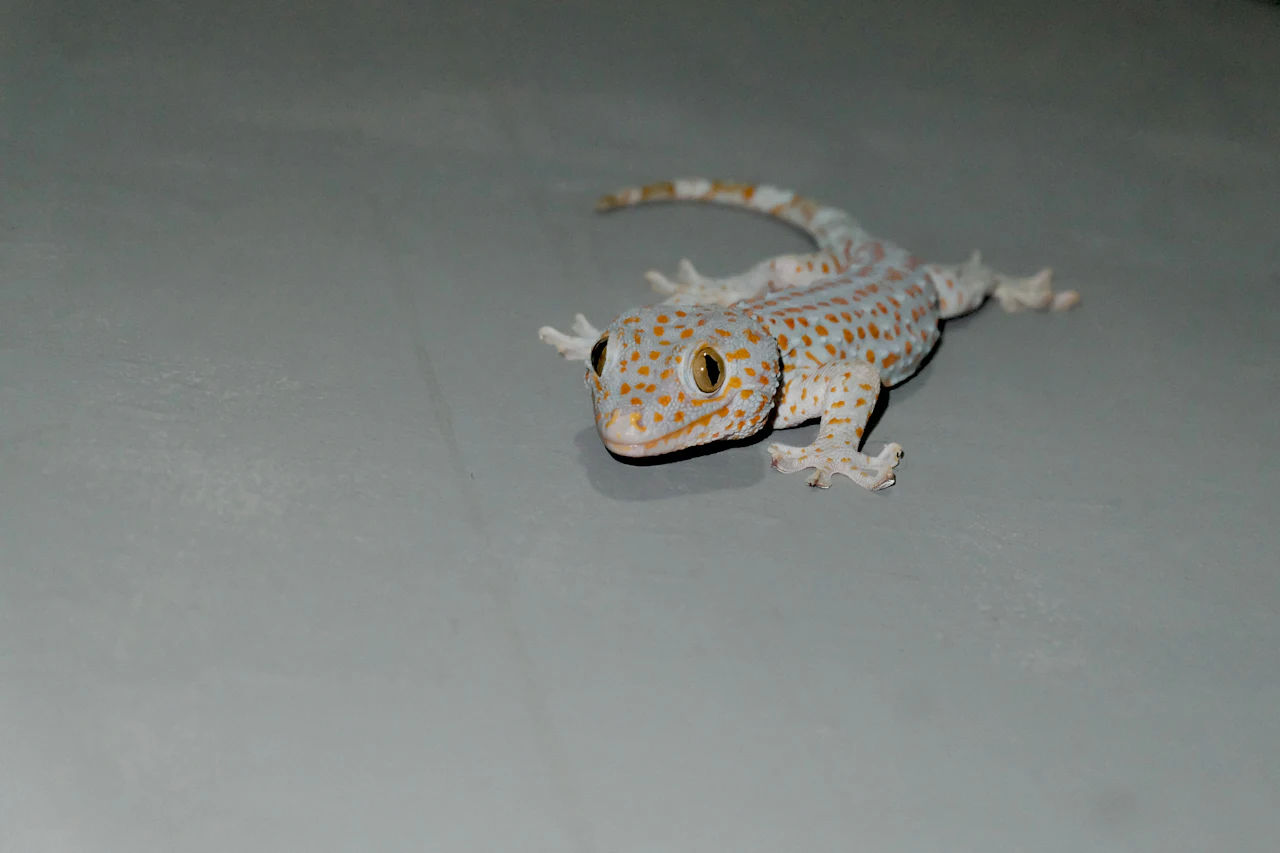
House geckos (locally called wazgha or burais) are the most common reptile inside UAE buildings — you'll find them in every villa, every restaurant kitchen, every loading bay, every electrical panel. They're actually beneficial in moderation: a single gecko eats hundreds of mosquitoes, moths and small cockroaches every week. The problem isn't the gecko itself; it's the droppings (small black pellets with a white tip) that appear on walls, food prep surfaces and electrical panels — which immediately fail any restaurant HACCP audit or hotel hygiene inspection. They also squeak loudly at night, occasionally scare residents, and sometimes drop dead into AC vents. PestMan takes an explicitly humane stance: we never relocate a gecko unless it's stuck in an AC unit or trapped in a confined void. Instead, we run a structured exclusion programme — sealing entry points around AC chases, eaves, weep holes and door sweeps; deploying species-appropriate deterrent gels; coordinating outdoor lighting changes to reduce the insect prey they're chasing; and following up with a verification visit to confirm the geckos have relocated on their own. This is the only ethically sound approach in UAE cultural context, where geckos are widely tolerated or even welcomed, and it's also the only approach that actually works — killing one gecko just opens a feeding niche for the next.
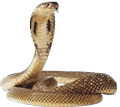
The second half of the service is a desert-edge safety response that's specific to villas in Mirdif, Mushrif, Khalifa City, MBZ City, Al Ain, Al Suyoh and the Hajar foothills around RAK. Venomous snakes — the saw-scaled viper (Echis carinatus), the Arabian horned viper (Cerastes gasperettii) — and the deathstalker scorpion (Leiurus quinquestriatus) all share the dune-and-rockery boundary that backs onto these communities, and a single warm humid night after rain can push them into villa gardens, BBQ areas and pool decks. PestMan runs a 24/7 emergency response: we never attempt unlicensed snake handling ourselves; for live venomous sightings we partner with Dubai Police and Civil Defence wildlife units (the licensed snake-handling authority in the UAE) to dispatch a qualified handler the same day, and we follow up with property hardening — sealing gaps under fences and weep-holes, removing rockery hiding spots, and applying scorpion barrier treatment around the perimeter. The 90-day warranty covers gecko exclusion verification; venomous reptile response is a same-day emergency call-out rather than a warranty service.
8–14 cm pale tan to grey lizard with sticky toe pads — climbs walls and ceilings
Most common indoor reptile in UAE villas, kitchens, hotels and warehouses
Doesn't bite or transmit disease, but droppings fail HACCP audits and contaminate prep surfaces
Chirps at 2–4 AM and occasionally dies inside AC ducts producing a brief odour
Saw-scaled Viper
02
Small (40–60 cm) but the most medically significant snake species in the UAE
Sandy-brown with a distinctive zigzag dorsal pattern and a darker head V-mark
Rubs its scales together to make a sawing/rasping sound when threatened — its warning
Bite requires immediate hospital antivenom; do not approach, photograph from distance only
Arabian Horned Viper
03
Sandy-coloured 40–80 cm viper with distinctive raised scales (horns) above the eyes
Ambush hunter that buries itself in soft sand with only the eyes and horns visible
Active mainly at dusk and through the night; rests under rocks and rubble by day
Primarily found in the northern emirates, desert-edge villas and dune-backed plots
Deathstalker Scorpion
04
Pale yellow to straw-coloured, 8–11 cm — the most venomous scorpion in the UAE
Hides under rocks, ornamental garden pots, paving slabs and outdoor BBQ stones
Active at night; fluoresces green-blue under a UV torch, which is how we survey for them
Sting requires emergency hospital care — especially dangerous to children, elderly and pets
How it works
Our treatment process
01
Entry-Point Survey
Map every gap above 4 mm — AC chases, eaves, weep holes, electrical penetrations, door sweeps — and photograph each one for the exclusion plan. For desert-edge villas we also survey fence lines, rockeries and BBQ areas at night with UV light for scorpions.
02
Exclusion, Sealing & Civil Defence Liaison
Seal entry points with food-safe silicone and stainless-steel mesh; install vent covers and replace worn door sweeps — no killing, no toxic foggers. For live venomous snake sightings we coordinate same-day Civil Defence dispatch of a licensed handler.
03
Prey-Source & Habitat Reduction
Switch outdoor lighting to amber/yellow LED to stop attracting the insects geckos feed on, plus install humane deterrent gels at remaining touch points. For desert-edge villas we also clear rockery hides and apply a scorpion residual barrier.
04
Verification & 90-Day Warranty
Two verification visits to confirm no new gecko droppings and seal any missed gaps, plus unlimited free call-outs across the 90-day gecko exclusion warranty. Venomous reptile response is billed as same-day emergency, not warranty.
Service tiers
Our reptile, gecko & snake services
01
Residential Gecko Exclusion
Humane indoor gecko exclusion for villas and apartments — entry-point sealing, lighting changes, deterrent gels — with a 90-day verification warranty. No killing, no glue boards.
02
Commercial HACCP Reptile Control
HACCP-compliant exclusion programmes for restaurants, hotel kitchens, food warehouses and pharmacies with documented entry-point logs and audit-ready certificates for Dubai Municipality inspections.
03
Emergency Snake & Scorpion Response (24/7)
Same-day desert-edge villa response for live venomous reptile sightings across Mirdif, Khalifa City, Al Ain, RAK foothills and similar communities — Dubai Police and Civil Defence escalation route for licensed snake handling, plus property hardening and scorpion barrier.
reptile, gecko & snake control guide
Everything you should know
A short, honest field guide — what we look for, how we treat, and how to keep them out for good.
How to identify them
House gecko: 8–14 cm long including tail, pale tan to grey, almost translucent skin, sticky toe pads
Large dark eyes with vertical pupils, active mainly after dusk
Distinctive chirp or squeak at night, often mistaken for an insect
Gecko droppings: 5–8 mm dark cylindrical pellets with a chalky white tip (uric acid)
Tail breaks off as a defence mechanism — regrown tails look smoother and stubbier
Saw-scaled viper: sandy-brown 40–60 cm with zigzag dorsal pattern and a sawing sound when disturbed
Arabian horned viper: sandy 40–80 cm with raised scale 'horns' above each eye, buries in sand to ambush
Deathstalker scorpion: pale yellow 8–11 cm, slender pincers, thick venomous tail; fluoresces green-blue under UV light
Signs of infestation
Small dark droppings with a white tip on walls, electrical panels and counter tops (gecko)
Live geckos seen on walls, ceilings or behind picture frames at night
Squeaking or chirping sounds in walls or AC chases at 2–4 AM
Dead gecko in the AC vent or air-handling unit
Shed snake skin (long translucent membrane) caught in garden borders, under outdoor furniture or against boundary walls
Sand-drag trail and disturbed sand pattern in garden borders after a warm humid night
Sawing or rasping sound from low garden vegetation at dusk — saw-scaled viper warning
Scorpion hiding under rocks, paving slabs, garden pots or BBQ tools when moved
Family dog or cat pointing fixedly at a rockery, planter or external wall corner
HACCP audit non-conformance citation for visible reptile activity
Health & safety risks
Geckos do not bite humans defensively and do not transmit disease through skin contact
Gecko droppings on food prep surfaces are a HACCP critical control point failure
Salmonella has been isolated from gecko droppings in lab studies — surface contamination risk
Dead geckos in AC ducts can produce a brief odour but no airborne health concern
Saw-scaled viper bite is a medical emergency — apply pressure-immobilisation, do NOT cut/suck the wound, get to hospital immediately for antivenom
Arabian horned viper bite causes severe local swelling and tissue damage even when systemic envenomation is mild — still requires hospital evaluation
Deathstalker scorpion sting is potentially fatal in children, elderly and immunocompromised adults — emergency hospital care, no home remedies
Pet dogs and cats that investigate snakes face high envenomation risk due to face-first approach — vet emergency
Psychological distress for residents with reptile or arachnid phobia is the most common 'health' complaint
Where you'll find them
Around AC unit chases and air-handler ducting penetrations (gecko)
Roof eaves, soffit gaps and external weep holes in brickwork (gecko)
Door sweeps with worn brushes and garage roller-door bottoms (gecko)
Electrical panels, distribution boxes and behind switch plates (gecko)
Restaurant kitchen ceilings near loading-bay doors (gecko)
Behind picture frames, mirrors and wall-mounted TVs at upper room corners (gecko)
Storage rooms and warehouse loading bays where insects gather around lights (gecko)
Garden boundary walls, rock-feature landscaping and palm-tree skirts (snake, scorpion)
AC compressor concrete pads, pool deck stones and BBQ paving (scorpion)
Under garden pots, low rockeries and decorative gravel zones (scorpion)
Dune-backed villa gardens in Mirdif, Khalifa City, Al Ain and Hajar foothill communities (snake)
When they're active
Gecko active year-round indoors in UAE — climate-controlled spaces are ideal
Outdoor gecko population peaks April to October when nights stay above 22°C
Indoor gecko migration spikes November to February as outdoor nights cool
Gecko breeding season March to August — soft-shelled eggs appear in dark warm voids
Snake activity peaks April through October at dusk and overnight
Snake sightings spike after the first humid evening following a heatwave or rain event
Scorpion foraging year-round but peaks May through September with summer humidity
Loading bay and storage activity is steady year-round around external lighting
Our treatment approach
Full property entry-point survey — AC chases, eaves, weep holes, electrical penetrations, door sweeps (gecko)
Silicone and stainless-steel mesh sealing of all gaps above 4 mm — geckos squeeze through anything larger
Replacement of worn door sweeps and brush seals on external doors
Vent cover installation on accessible AC openings and air-handler chases
Outdoor lighting audit — replacement of insect-attracting white bulbs with amber/yellow LED
Humane deterrent gels at access points (capsaicin-based, non-toxic to geckos)
Pheromone disruption strips in ceiling corners (commercial sites)
Verification visit at day 30 to confirm no new droppings and seal any missed gaps
Licensed snake-handler dispatch via Dubai Police / Civil Defence wildlife partnership for any live venomous snake sighting
Same-day safe relocation of captured live snakes to designated desert release zones agreed with Civil Defence
Property hardening: gap sealing under boundary fences, weep-hole screens and removal of rockery hiding spots
Scorpion residual barrier spray applied around BBQ areas, pool decks, garden lighting and AC compressor pads
UV-light night survey to identify scorpion hot zones — scorpions fluoresce green-blue under ultraviolet
Prevention tips
Switch all outdoor white-light bulbs to amber/yellow LED — the single biggest deterrent because it stops attracting prey insects
Install vent covers on AC chases and air-handler openings during annual maintenance
Replace door sweeps and brush seals on garage and external doors every 2 years
Keep balcony plants 1 metre away from external walls — vegetation gives geckos a daytime hide-and-climb route
Run a torch around external walls each quarter to spot new gaps as buildings settle and seals shrink
Don't leave kitchen lights on overnight in restaurants — it attracts the insect prey geckos hunt
For desert-edge villas: clear rocks, garden pots and ornamental boulders away from the boundary — they harbour scorpions and ambushing vipers
Wear closed shoes in the garden at dusk and never reach blindly under outdoor furniture or BBQ tools after sunset
Brief the gardener on snake-safe practice — gloves, long sleeves, no hand-clearing under shrubs
Prep & aftercare
Before & after your service
Before your visit
Walk the property and photograph every entry point you've noticed geckos using — AC chases, eaves, weep holes, vents
Photograph dropping locations on walls, counters and electrical panels so we can map activity zones
Do NOT spray DIY repellent, naphthalene or peppermint oil in the 7 days before — it interferes with the exclusion plan and scatters geckos to new hides
Clear loose items from windowsills, balcony edges and the tops of wardrobes where we'll need ladder access
Brief staff at restaurants that we'll be working in the kitchen ceiling and loading-bay area for 2 hours
Keep small dogs and cats inside during the outdoor lighting and sealing work — open doors during exclusion let geckos in
For live snake sightings: keep family and pets indoors, do not attempt approach or capture, photograph from a safe distance through a window and call our 24/7 line immediately
After your service
Leave the silicone-sealed entry points untouched for 48 hours so the sealant cures fully
Switch all outdoor light bulbs to yellow/amber LED within 2 weeks — this is the single biggest long-term factor
Keep window and balcony door screens closed for the first 2 weeks while geckos already inside relocate outward
Wipe existing droppings off walls and counters with diluted bleach (1:10) so we can see only new activity at the verification visit
Do not relocate captured geckos to your neighbour's property — release them at least 1 km away in vegetated areas
After scorpion barrier application, keep pets and barefoot children off treated paving and BBQ stones for 6 hours until dry
Log any new droppings, snake sightings or scorpion encounters via WhatsApp; we'll bring forward a verification visit under warranty
The questions we hear most about reptile, gecko & snake control jobs in the UAE.
Are geckos actually harmful or are they just an aesthetic problem?
Mostly aesthetic and regulatory, not medical. House geckos don't bite humans defensively, don't carry rabies, and don't transmit disease through skin contact or air. The genuine concerns are: (1) their droppings on food prep surfaces fail any HACCP, Dubai Municipality or hotel audit — that's the most common reason we get called; (2) Salmonella has been isolated from their droppings in lab studies so cross-contamination on counters is a hygiene risk; (3) they can damage electrical equipment by getting trapped inside panels. Inside a home with no food business and no electrical issues, a few geckos are honestly net-beneficial — they eat the mosquitoes and moths you'd otherwise pay to control. The decision to exclude is yours; we explain the trade-off, never push.
Will you kill the geckos in my villa or use poison?
No. We have an explicit no-kill policy for reptiles and we don't use rodenticide-style or glue-board approaches that would slowly kill geckos. We never relocate a gecko at all unless it's stuck inside an AC unit or trapped in a confined void where it cannot escape on its own — and even then it's a humane release to vegetated land at least 1 km away. Killing one gecko opens a feeding niche for the next gecko within 2–3 weeks, so it doesn't actually solve the underlying problem. Our approach is exclusion (sealing the entry points so new geckos can't get in), prey-source reduction (changing outdoor lighting so insects don't gather near your walls), and humane deterrent gels at access points. The geckos already inside the building leave on their own within 7–21 days once their water and food supply is interrupted, and they cannot get back in once entry points are sealed.
Does the ultrasonic gecko repellent I bought online actually work?
No. Multiple peer-reviewed pest-management studies have tested ultrasonic devices on lizards, rodents and insects, and the consensus is that they have zero measurable effect after about 72 hours — animals habituate quickly. The plugs run on widely tested frequencies that lab geckos walk past without changing behaviour. The marketing claims rely on the placebo of seeing fewer geckos after install, but the population fluctuates naturally week-to-week regardless. What actually works is physical exclusion (sealing gaps), prey reduction (lighting changes) and deterrent gels that work via chemical contact at access points. We say this on every site visit; we'd rather lose a sale than recommend something we know doesn't work.
Dubai Municipality flagged gecko droppings in my restaurant — what do I do before the re-inspection?
Three actions in 48 hours. First, deep-clean every surface where droppings were spotted with diluted bleach (1:10) and document the cleaning with timestamped photos for the audit file. Second, book us for an emergency exclusion service — we'll seal all kitchen ceiling entry points, the loading-bay door gaps and any electrical penetrations, and issue you a signed exclusion certificate the inspector can see. Third, switch the kitchen and loading-bay external lighting to amber LED that night — the inspector specifically checks whether you've addressed the root attractant. Restaurants that complete all three pass the re-inspection at the next visit; restaurants that just clean the droppings get flagged again within 4–6 weeks.
Can I keep one gecko in the villa for natural mosquito control and only exclude the others?
Functionally no — geckos are territorial but they're not single-occupancy. If conditions support a population (insects available, gaps in walls, warm voids), one gecko becomes three within a breeding season because females lay eggs in pairs every 6 weeks. You can't selectively exclude all geckos except a 'pet' wild gecko; the exclusion is binary. What you can do is make a conscious decision not to exclude at all if mosquito control is the priority — embrace the geckos and accept the droppings on outdoor walls. Several of our clients choose this for their gardens and outdoor seating, and we focus the exclusion only on the kitchen and bedrooms.
How long after sealing entry points before the geckos actually leave?
Most geckos already inside the building leave within 7–21 days once their water and prey supply is interrupted by the exclusion. The geckos go to find a new building or move to outdoor walls. A small number may die inside if they've been trapped in a deep void without water — we'll find and remove these at the day-30 verification visit. Heavily infested commercial buildings sometimes take 6–8 weeks for full clearance because the population is larger and the gecko 'turnover' is slower. The 90-day warranty is calibrated specifically to this timeline — if you still see droppings at day 60, we come back and find the missed gap, no charge.
There's a small lizard or skink in my pool filter housing — is that a gecko issue?
Probably not a house gecko — geckos avoid water and don't typically explore pool equipment. What you've usually found is a sand skink or a juvenile garden lizard that wandered in through the pump room door and got disoriented. We do humane removal for these as part of the reptile service: catch with a soft cloth, photograph for our records, and release in vegetated areas at least 1 km from your property. We then check the pump room for entry points (door gap, cable penetrations) and seal them the same way we'd seal a gecko entry point. If you've been finding multiple lizards in the pool area over weeks, we'd run a fuller external perimeter survey.
There's a dead gecko in my AC unit — is the air safe to breathe?
The air is safe — geckos are small enough (about 4 grams) that a single decomposing body produces minimal volatile compounds and absolutely no airborne pathogens of human concern. You will smell something faintly musty for 3–7 days while the body desiccates in the dry UAE airflow, after which the smell disappears entirely. The bigger issue is bacterial growth in the unit's evaporator coil if the body fell into a damp drip tray — that's why we always inspect and clean the AC unit during the service visit. If you smell anything strong or putrid lasting beyond a week, it's usually a rodent, not a gecko, and you'd want us to inspect the duct chase urgently.
Do you remove venomous snakes from villa gardens — and is it safe to wait?
Yes, but with a critical caveat: PestMan does not perform unlicensed snake handling. For any live venomous snake — saw-scaled viper, Arabian horned viper, or any unidentified large snake — we operate as a same-day dispatch and coordination service in partnership with Dubai Police and Civil Defence wildlife units, who are the licensed snake-handling authority in the UAE. Call our 24/7 line the moment you see the snake. While we coordinate the licensed handler en route, here is the victim-first protocol: get all family members and pets indoors, close the door to the room nearest the sighting, do not approach within 5 metres, do not attempt to corner or kill the snake (most bites happen during DIY removal), and if you can do it safely from behind glass, photograph the snake at distance for ID. Never throw water, hot oil, or chemicals — they enrage but don't immobilise. A coiled saw-scaled viper waiting in a shaded garden will not chase you; the safe move is to wait inside with doors closed. Most dispatches reach desert-edge villas in Mirdif and Khalifa City within 60–90 minutes.
Which UAE emirates and communities most often need snake and scorpion service?
Service demand tracks the dune-and-rockery line where suburban villa development meets undeveloped desert or mountain. The highest call-out concentrations are: Mirdif and Mushrif in Dubai (backing onto the Mushrif desert and Mirdif Park dunes), Khalifa City and MBZ City in Abu Dhabi (open dune frontage to the south and east), Al Ain villa districts (Hili, Al Jimi, Al Mutaredh — backed by the Hajar foothills), Sharjah's Al Suyoh and Al Tay (transitioning into rocky scrub), and the foothill belt of Ras Al Khaimah and Fujairah near the Hajar mountains where Arabian horned vipers are most concentrated. Demand spikes in two predictable windows: after the first humid evening following a summer heatwave (May through September), and 24–72 hours after a rainstorm in any season — both push snakes and scorpions out of cracks and rockeries searching for water and disoriented insects. If you've recently moved into a new villa in any of these communities, we recommend a pre-occupation perimeter survey with UV night-light for scorpions before children spend time in the garden.