Service · Spider treatmentMedium riskLatrodectus geometricus, Pholcus phalangioides, Solifugae spp.
Spider Control across the UAE
Brown widows in garage corners, harmless house spiders in ceiling cobwebs, and the terrifying-but-harmless camel spider — UAE's three most-confused arachnid concerns. 6-month pest-free guarantee.
Active · Brown widow active year-round in sheltered outdoor and garage environments, Camel spider peak May to September — only enters villas during the hottest summer nights
Spider calls in the UAE split into three distinct problems that need very different responses. The real medical concern is the brown widow (Latrodectus geometricus) — established in Dubai garages, outdoor planter saucers, abandoned BBQ areas and undisturbed shed corners — whose bite causes serious neurological pain and occasionally needs A&E intervention for children and the elderly. The everyday nuisance is the long-legged house spider (Pholcus and Tegenaria) that strings messy cobwebs in ceiling corners, behind curtains and around skylights; harmless but visually unpleasant and often the reason owners book a treatment. The third — and source of the most panicked calls from new UAE residents in summer — is the camel spider (Solifuge), which despite the name is NOT actually a spider and NOT venomous, but its 50–70 mm body, lightning speed and aggressive defensive posture make it the single most psychologically terrifying creature anyone encounters in a Dubai villa. Spiders are predators — their numbers track their food supply, so durable control depends on cutting the insect population (flies, mosquitoes, moths, ants) that draws them in, not just killing the adults you see. PestMan's programme combines physical web and egg-sac removal, residual perimeter spray around eaves, garage corners and outdoor light zones, and cross-linking with our fly/mosquito control for long-term spider prevention — backed by a 6-month pest-free guarantee with unlimited free call-outs.
Bite produces severe muscle cramps, sweating and hypertension — A&E referral for children, elderly, pregnant women
House Spider (Pholcus / Tegenaria)
02
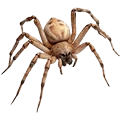
6–10 mm body, pale tan to grey with disproportionately long thin legs — the 'daddy long-legs'
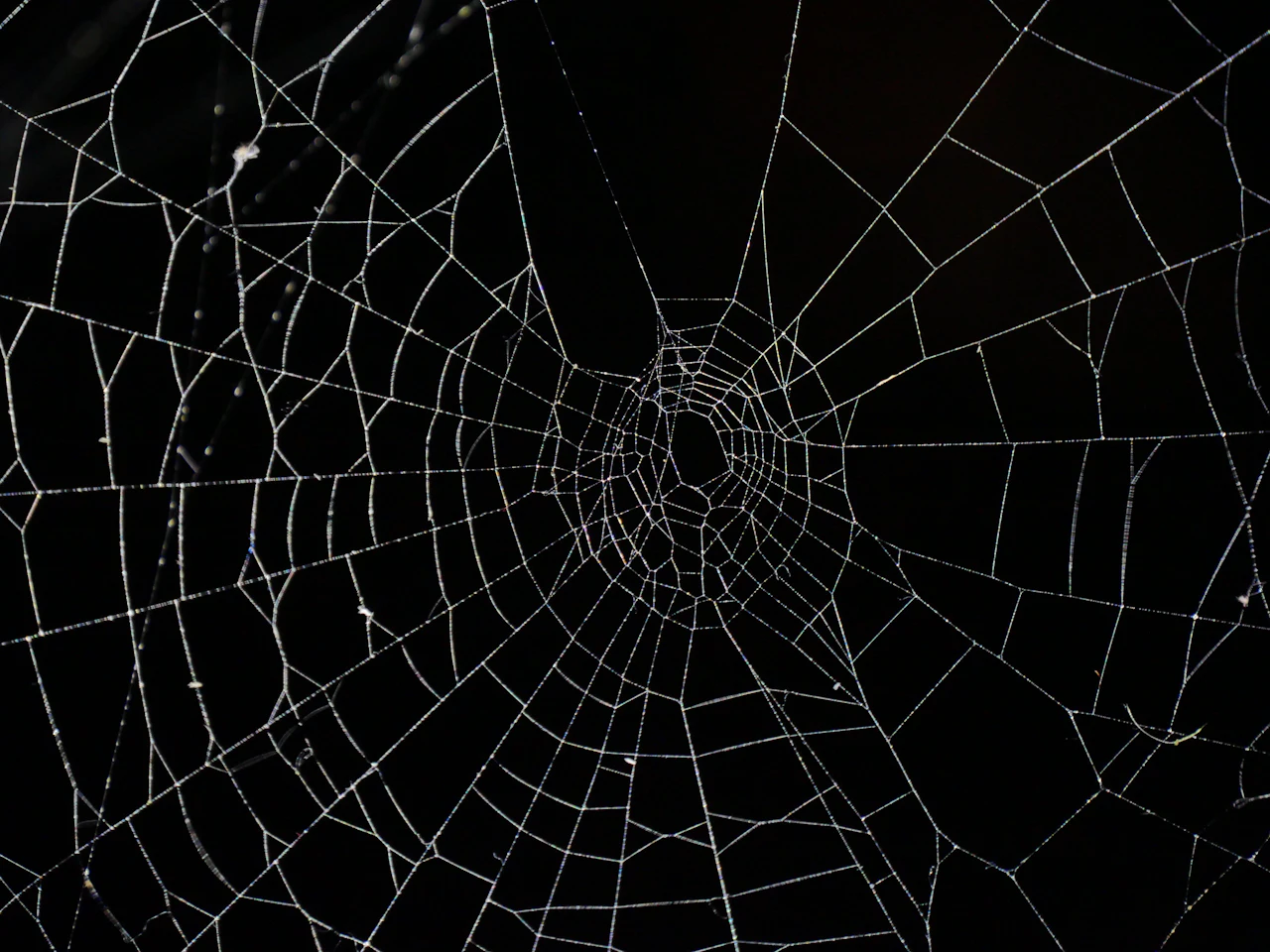
Spins messy, irregular cobwebs in ceiling corners, behind curtains, around bathroom skylights
Most-encountered indoor spider in UAE apartments and villas — visual nuisance only, harmless
Single web caught in a corner overnight is enough to make a clean villa look neglected
Camel Spider / Solifuge (NOT a spider)
03
50–70 mm body, sandy yellow-brown, lightning-fast runner that can reach 16 km/h
Despite the name and viral myths, NOT a true spider — different order (Solifugae) and NOT venomous
Aggressive looking jaws and defensive posture make it terrifying — but bite risk is mechanical only
Runs into villas at night during May–September seeking shelter from peak desert heat — psychological pest, not medical
How it works
Our treatment process
01
Species Inspection
Walk garage, outdoor planters, BBQ area, sheds and indoor ceilings to identify brown widow vs house spider activity and locate every egg sac.
02
Web & Egg-Sac Removal
Physically remove every visible web, dead insect debris and egg sac using extension pole and HEPA vacuum — non-chemical first line.
03
Perimeter Treatment
Residual spray on eaves, garage frames, outdoor lights and shed roofs to prevent re-establishment — plus direct treatment of any brown widows located.
04
Follow-up & 6-Month Warranty
Free re-visit at day 21 to remove any new webs and confirm clearance, plus unlimited free call-outs across 180 days.
Service tiers
Our spider services
01
Residential
Villa and apartment programmes covering indoor cobweb clearance, brown-widow garage and planter treatment, and outdoor perimeter spray — 6-month pest-free guarantee.
02
Commercial
Schools, nurseries, hotels and outdoor restaurant terraces — full property spider survey, brown-widow risk assessment for play areas, and quarterly follow-up programmes.
03
Emergency 24/7
Same-day response for confirmed brown widow sightings in child play areas, a camel spider trapped indoors, or an outdoor event preparation requiring web clearance.
spider control guide
Everything you should know
A short, honest field guide — what we look for, how we treat, and how to keep them out for good.
How to identify them
Brown widow: 10–15 mm glossy brown female with orange hourglass on underside; tan spiky golf-ball-sized egg sacs are the giveaway
House spider: 6–10 mm pale body with disproportionately long thin legs, irregular messy cobwebs in ceiling corners
Camel spider: 50–70 mm sandy-yellow Solifuge with large jaws — NOT a true spider, NO venom
Wolf spider (occasional UAE encounter): brown, 15–35 mm, ground hunter — no web, carries egg sac on the abdomen
Jumping spider (often outdoors): 5–15 mm with prominent large front eyes; harmless, beneficial
Egg sacs vs dust balls: spider sacs are smooth or spiky and silk-attached; dust balls fall when touched
Signs of infestation
Spiky tan golf-ball-sized egg sacs in garage corners or under outdoor patio chairs (brown widow — highest priority)
Multiple grey cobwebs accumulating in ceiling corners, above skylights or behind curtains week after week
Dead insect remains (fly wings, mosquito husks) collected in corner webs — indicates a feeding spider in residence
A fast-running large arachnid sighting in a hallway or bathroom on a summer night (camel spider)
Brown spider with hourglass marking seen in outdoor planter saucer or unused BBQ cover (brown widow)
Child reporting a sharp bite at night with localised swelling — photograph the spider if possible for ID
Health & safety risks
Brown widow bite: severe muscle cramping, sweating, hypertension and abdominal pain — A&E presentation for children, elderly and pregnant women
Secondary infection of any spider bite site through scratching — bacterial cellulitis is the more common medical sequel
Severe psychological distress from camel spider sightings — though medically harmless, the encounter triggers genuine panic attacks in some residents
Allergic reaction to brown widow venom in approximately 1 in 200 cases — antihistamines and steroids may be needed
Wolf spider bites are painful but not medically significant — like a deep wasp sting without venom complications
Cobweb contamination of food prep counters and child play areas — hygiene rather than medical concern
Where you'll find them
Garage corners, behind shelving and around unused tools (brown widow)
Outdoor planter saucers, under flowerpots and on the underside of patio chairs (brown widow)
Abandoned BBQ areas, pool equipment sheds and garden storage boxes (brown widow)
Ceiling corners, skylight frames and bathroom extractor vents (house spider)
Behind curtains, picture frames and rarely-moved wardrobes (house spider)
Outdoor light fixtures and the wall area within 2 m of them (multiple species — the lights attract prey insects)
Open villa doors during summer dusk hours (camel spider entry point)
When they're active
Brown widow active year-round in sheltered outdoor and garage environments
Camel spider peak May to September — only enters villas during the hottest summer nights
House spider population builds steadily after Ramadan as fly and moth food supply rises into summer
Spider egg-sac production peaks April–June across all species — best time for a clearance treatment
Our treatment approach
Physical removal of all visible webs, dead insect debris and (critically) egg sacs using extension pole and HEPA vacuum
Direct contact spray of any live brown widow with municipality-approved synthetic pyrethroid
Residual perimeter spray around eaves, garage door frames, garden walls and outdoor light fixtures
Cracks-and-crevices dust treatment in garage shelving voids and shed roof joins where widows nest deep
Cross-treatment with fly/mosquito control if the property has high insect pressure — long-term spider prevention starts there
Camel spider exclusion: weather stripping on villa main doors, garage seals, and timing of door-opening avoidance during summer dusk
Prevention tips
Switch outdoor lights to warm-toned LED or sodium-vapour bulbs — UV-rich white LED attracts the insects that feed spiders
Inspect garage corners, planter saucers and BBQ covers monthly during April–June for brown widow egg sacs — peak season
Don't store cardboard boxes in garage corners or sheds — undisturbed cardboard is the brown widow's preferred nest substrate
Fit weather strip seals on garage and villa main doors — closes the camel spider entry route during summer dusk
Address the underlying insect pressure (flies, mosquitoes, moths) with PestMan's fly or mosquito programme — long-term spider prevention
Wear gardening gloves when handling planter saucers, pool equipment and seasonal BBQ covers — brown widows hide on the underside
Prep & aftercare
Before & after your service
Before your visit
Leave webs visible — do NOT sweep or vacuum before the technician arrives; we follow them back to nests and egg sacs
Close all windows and external doors for the duration of the visit so spiders can't escape outdoors during web removal
Brief household members not to swat any spider sightings — capture it under a clear cup for ID rather than killing it
Move pots, BBQ covers, garden cushions and shed contents 30 cm away from walls so the technician can inspect behind
Photograph any spider you've seen and keep the image for the technician — saves diagnostic time, especially for brown widow vs harmless species
Switch off outdoor lights 2 hours before the visit if possible — fewer night insects means fewer hidden spiders
After your service
Expect to see MORE spiders briefly in the first 24 hours as the residual spray drives them out of treated voids — vacuum any new sightings
Leave outdoor light bulbs OFF for 48 hours after treatment to avoid attracting prey insects that bring spiders straight back
Vacuum any dead spiders and egg sacs found indoors over the following 7 days — the residual continues working for 90 days but visible debris is unsightly
Do not wipe or wash garage corners, eaves or outdoor light surrounds for 14 days — that's where the residual film is doing its work
Keep garage and shed doors closed at night during summer — the perimeter barrier blocks crawl-in but open doors defeat it
Send a photo via WhatsApp of any new brown widow sighting within the 180-day warranty — free re-treatment, no questions asked
The questions we hear most about spider control jobs in the UAE.
Are camel spiders actually spiders — and are they really venomous like the WhatsApp videos claim?
No on both counts, and this is the single most-asked question we get from new UAE residents every summer. Camel spiders belong to the order Solifugae, which is a separate arachnid order from true spiders (Araneae). They have NO venom glands — that's an anatomical fact, not a clinical interpretation. The 'they eat camel stomachs' / 'they scream while running' / 'they chase humans' videos circulating on WhatsApp during the Iraq and Afghanistan wars were either staged camera-perspective tricks (the solifuge running toward shade under the lens) or pure fabrication. What IS true: they're alarmingly fast (16 km/h), they have proportionally large jaws that can deliver a painful mechanical bite if mishandled, and a 70 mm one running into your bedroom at 2am is one of the more memorable experiences of UAE life. We've treated thousands of villas for camel spider exclusion — door seals and garage thresholds — and seen zero actual envenomation cases. Catch it with a plastic container, slide a piece of cardboard underneath, release it outside. No medical concern.
How worried should I be about brown widows in my Dubai villa garden?
Moderately — not panicked, but actively. Brown widows (Latrodectus geometricus) are established across UAE residential gardens and are genuinely the only spider in the country with a bite that can require A&E attention. The good news is they're shy, sedentary, and predictable: they almost always nest in undisturbed dark cavities — the underside of plastic planter saucers, inside garage shelving voids, under BBQ covers that haven't been moved for months, inside coiled garden hoses. Walk those zones in daylight wearing thick gardening gloves, look for the diagnostic tan, spiky, golf-ball-sized egg sacs, and you'll find them before they find you. If your villa has children playing in the garden and a garage with stored boxes, an annual brown widow survey is worthwhile and we offer it as part of the standard residential spider treatment. A confirmed brown widow in a kids' play area is a same-day emergency call for us.
I've heard spiders can jump at people — is that a real risk in UAE?
Only one UAE arachnid genuinely jumps — the small (5–15 mm) salticid jumping spider — and it jumps for prey, not at humans. The viral 'spider jumped at me' stories typically describe either (a) a salticid making a 2–3 cm leap onto a nearby surface and the observer interpreting the movement as aggression, or (b) a wolf spider sprinting unexpectedly across a floor (which is running, not jumping). Brown widows do not jump. House spiders do not jump. Camel spiders do not jump — they run, often very fast, sometimes toward shade that happens to be your shadow. No spider in the UAE will deliberately leap at a human being. The defensive behaviours that look like a 'jump' on phone video are almost always a startled lateral bolt for cover.
Do I need professional treatment if I just keep clearing the cobwebs myself with a duster?
Web-clearing alone works for cosmetic house-spider control if you can be disciplined about doing it weekly across every ceiling corner, light fixture and skylight in the villa — a 45-minute job that almost no one keeps up consistently for more than a month. The two limitations are: (1) DIY clearing reaches surface webs but not the cracks and crevices where spiders actually nest and lay egg sacs, so the same corner regrows a web within 5–7 days, and (2) you cannot safely DIY a brown widow in a garage corner — disturbance triggers a defensive bite reflex and the egg sac alone produces 50–250 hatchlings if missed. Professional treatment combines physical clearing with a 90-day residual that stops re-establishment, plus the technician knows what to look for in widow nests. For a clean apartment in a low-pressure tower, weekly dusting is genuinely enough. For a villa with garden and garage, professional treatment plus quarterly maintenance is the better answer.
My outdoor light fixture is covered in webs and dead insects every morning — what's going on?
Outdoor lights are the single biggest non-obvious spider attractor on a UAE villa. The light spectrum (especially UV-rich cool-white LED and traditional metal-halide) draws moths, flies, mosquitoes and beetles all night long, and spiders learn within days that the wall area around the light is the most reliable hunting ground on the property. So they string webs at exactly that height, catch dozens of insects per night, and you wake up to the visual mess. Two changes drop spider activity around the light by 70–80%: (1) switch the bulb to a warm-toned (under 3000K) LED or amber sodium-vapour, which dramatically reduces insect attraction; (2) move the light fixture 2–3 m away from the doorway it currently illuminates — far enough that prey insects don't carry the spider problem into the building. We include this advice in every spider service and can recommend specific bulbs.
Is there a 'spider season' in UAE — and when should I book a treatment?
Yes, with two distinct patterns. (1) Egg-sac production peaks April through June across all UAE spider species — this is the highest-value treatment window because removing a single brown widow egg sac in May prevents 50–250 hatchlings from spreading across your garage and garden through summer. (2) Camel spider sightings peak May through September, with the heaviest indoor incursions during the 40°C+ nights of July–August. House spider webs accumulate steadily through summer as fly and mosquito food supply rises. If you can only do one treatment a year, book it in late March or early April — you catch egg sacs before they hatch AND establish a perimeter barrier before camel spider season starts. A second top-up in October is ideal for properties with high outdoor pressure (large gardens, BBQ areas, pool decks).
I found a spider in my baby's nursery — what's the safe protocol?
Remove the spider immediately under a clear glass (it lets you ID it before release without contact), move the baby to another room and book a same-day inspection. The treatment protocol for nurseries is gentler than our standard residential approach: we skip residual spray on cot-side walls entirely, focus on physical web removal plus cracks-and-crevices dust along the skirting behind furniture, treat the wall area BEHIND the cot but only with diatomaceous earth (mechanical, non-chemical), and apply standard residual only on outside-facing window frames where airborne residue cannot reach the cot. Brown widow in a nursery is a same-day emergency for us regardless of time. If the spider was the harmless long-legged Pholcus, you can usually return the baby to the room as soon as the visible web is removed. We brief parents on every product used and the EPA category of each active.
How do I keep brown widows out of my villa garage long-term?
Three things make a garage hostile to brown widows. (1) Remove the nesting substrate they love: clear stacked cardboard boxes (move belongings to plastic bins with snap lids), discard or seal coiled garden hoses, lift items off the floor onto open shelving instead of stacking against walls — widows specifically need undisturbed dark cavities. (2) Cut their food supply: an annual general perimeter treatment kills the moths, flies and small beetles that draw widows in to feed; without prey, the population collapses on its own. (3) Schedule a quick quarterly inspection — walking the garage corners, planter saucers and shed roof joins with a torch for 10 minutes every 90 days catches new nests before they produce egg sacs. Our recurring residential plan covers all three for around the cost of a single emergency call-out, and we've held client villas in Arabian Ranches, Mirdif and Al Furjan at zero confirmed brown widow sightings for multi-year stretches with this stack.