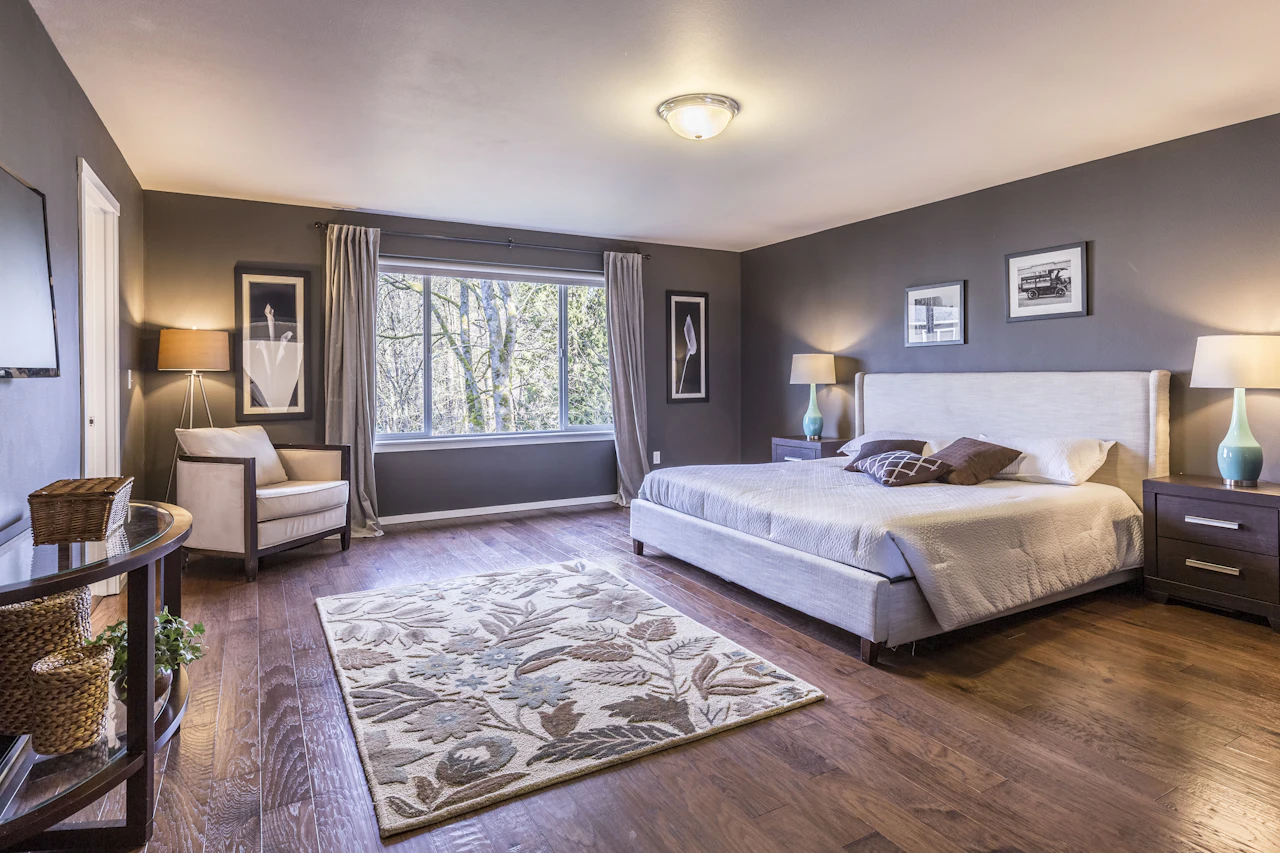
Service · Dust Mite treatmentMedium riskDermatophagoides pteronyssinus, Dermatophagoides farinae
Dust Mite Control across the UAE
Microscopic mites that trigger asthma, allergic rhinitis and eczema in UAE bedrooms — controlled through steam treatment and HEPA air purification. 6-month pest-free guarantee.
Active · Year-round in air-conditioned UAE bedrooms — temperature and humidity remain in their breeding zone, Worst months: November to March when residents close windows and indoor humidity climbs
Dust mites are the invisible pest most UAE families have never met but already share a bed with. They're 0.2–0.3 mm eight-legged arachnids living on the dead skin flakes humans shed every night — a typical mattress hosts 100,000 to 10 million mites depending on age and humidity. The mites themselves don't bite, don't carry disease and pose no direct threat. What harms us is their faecal pellets and shed body fragments: the Der p1 and Der f1 proteins inside are amongst the most potent allergens known to medicine and are the single biggest driver of allergic asthma, perennial rhinitis and atopic eczema worldwide. UAE bedrooms are particularly hospitable because air conditioning creates a stable 22–25°C with 55–70% humidity — exactly the range where dust mites breed fastest. PestMan's protocol combines deep professional steam treatment of mattresses, pillows, curtains and carpets (steam above 60°C kills mites and denatures the allergen proteins in a single pass) with HEPA-grade air purification to reduce airborne allergens for the next 6 months — plus zippered mite-proof encasements to lock survivors away from your breathing zone. Safe for children, pregnant women and pets, with a 6-month pest-free guarantee and unlimited free call-outs.
Inspect bedding, mattresses, carpets, curtains and upholstery; measure bedroom humidity and identify the worst hot-spots; review the family's allergy and asthma symptoms.
02
Steam Treatment of Affected Areas
Apply 60°C+ steam systematically across mattress, pillows, duvet, carpets, sofas and curtains — kills mites and denatures the allergen proteins simultaneously.
03
HEPA Air Purification + Encasement
HEPA-vacuum extract debris, run a portable HEPA H13 air purifier during treatment to capture airborne allergen, fit zippered mite-proof encasement on the mattress and pillows.
04
Report + 6-Month Warranty
Provide a treatment report (English/Arabic), a humidity-control plan for the bedroom, and book a day-14 follow-up — backed by a 6-month pest-free guarantee with unlimited free call-outs.
Service tiers
Our dust mite services
01
Residential
Bedroom-focused programmes for families with asthmatic children, eczema babies and allergic adults — mattress, pillow, carpet and curtain steam + HEPA purification + encasement, with a 6-month pest-free guarantee.
02
Commercial
Hotels, serviced apartments, nurseries, schools and corporate offices — scheduled allergen-reduction programmes promoting a healthy indoor environment with quarterly steam refreshes and allergen testing reports.
03
Emergency 24/7
Urgent treatment for severe paediatric asthma exacerbation, eczema flare-up requiring bedroom remediation, or pre-arrival treatment for an allergic guest — same-day deployment.
dust mite control guide
Everything you should know
A short, honest field guide — what we look for, how we treat, and how to keep them out for good.
How to identify them
Invisible to the naked eye — 0.2–0.3 mm, requires a microscope to see directly
Species: European house mite (Dermatophagoides pteronyssinus) and American house mite (Dermatophagoides farinae)
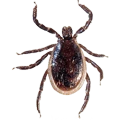
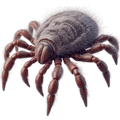
Eight-legged, translucent off-white, oval-bodied arachnids related to spiders and ticks
Lab confirmation via tape-lift sample from mattress sent to allergen-testing lab
Presence inferred from symptom pattern: morning congestion, eczema flare-ups, asthma worsening on awakening
Signs of infestation
Persistent morning sneezing, congestion or runny nose that improves after leaving the bedroom
Eczema or skin rash on cheeks, neck and arms — worse on waking, better after a daytime nap on a different sofa
Asthma symptoms (wheezing, night cough, chest tightness) worsening 1–2 hours after bedtime
Itchy red eyes on waking, especially in children
Symptoms easing during travel — and returning within a day of being back home
GP or paediatrician suggesting a skin-prick or specific IgE allergy test that comes back positive for Der p1 or Der f1
Health & safety risks
Allergic rhinitis — chronic stuffy nose, post-nasal drip and morning congestion in 1 in 5 UAE residents
Worsening of pre-existing asthma — dust mite allergens are a recognised trigger for hospital admission
Atopic eczema flare-ups in babies, toddlers and children — most active overnight on contact with bedding
Allergic conjunctivitis with red watery eyes on waking
Sleep fragmentation in adults — repeated micro-arousals from breathing difficulty
Reduced quality of life and impaired academic performance in dust-mite-sensitised schoolchildren
Where you'll find them
Mattresses — the single most concentrated habitat in a UAE home
Pillows — populations multiply if a pillow is over 18 months old
Duvets, blankets and decorative cushions
Carpets, rugs and the underlay beneath them
Upholstered sofas, armchairs and dining chairs
Curtains and heavy floor-length drapes
Soft toys, stuffed animals and children's plush bedding
Wardrobes with stored seasonal clothing and bed linen
When they're active
Year-round in air-conditioned UAE bedrooms — temperature and humidity remain in their breeding zone
Worst months: November to March when residents close windows and indoor humidity climbs
Population doubles within 4 weeks of an unchanged humid bedroom — fastest in spring
Symptom severity peaks in cooler months when bedroom HVAC runs continuously
Our treatment approach
Deep professional steam treatment of mattress, pillows, duvet, sofa and carpet at 60°C+ — kills mites AND denatures allergen proteins
HEPA-grade vacuum extraction (H13 filter) of dead mites, faeces and skin debris after steaming
HEPA air purification unit deployed during and after treatment to capture airborne allergen during disturbance
Anti-allergen residual mist (benzyl benzoate based) on carpets and upholstery — denatures Der p1 protein for up to 6 months
Zippered mite-proof mattress, pillow and duvet encasement (allergen-rated) fitted same day
Curtain steam treatment in situ or take-down + 60°C laundry cycle as advised
Soft-toy heat treatment in a 70°C cabinet for 90 minutes — safe for children's plush bedding
Prevention tips
Keep bedroom relative humidity below 50% year-round using a dehumidifier or the AC's dry mode at night
Wash bed linen at 60°C minimum every 7 days and high-heat tumble dry — lower temperatures do not kill mites
Replace pillows every 18 months — washable pillows can extend that to 24 months
Fit zippered mite-proof encasements on mattresses, pillows and duvets — the single most cost-effective long-term intervention
Choose hard flooring or low-pile rugs in bedrooms rather than thick carpet; if carpet is unavoidable, steam-clean it every 6 months
Avoid keeping plush soft toys in a child's bed; rotate them through a freezer cycle (-18°C for 48 hours) monthly
Prep & aftercare
Before & after your service
Before your visit
Strip the bed completely — sheets, pillowcases, mattress protector, duvet cover, pillow covers — and wash everything at 60°C ahead of the visit, then high-heat tumble dry 60 minutes
Vacuum the mattress, carpet and upholstery with the highest-suction setting and a clean HEPA filter the morning of the visit (or we'll do it on arrival)
Keep the bedroom door closed for 24 hours before our visit so we treat undisturbed mite habitat
Bag and seal all soft toys ready for our 70°C heat-cabinet step — label any sentimental favourite
Brief asthmatic family members to take their preventer inhaler dose 1 hour before our arrival; the disturbance briefly raises airborne allergen levels
Take down full-length washable curtains if you can; for non-washable heavy curtains we steam in situ
After your service
Run the air conditioner and a dehumidifier to bring bedroom humidity below 50% RH — this is the single most important habit; mites cannot breed below 50% RH
Install the zippered mite-proof mattress and pillow encasements the same day and do not unzip them for 12 months — they trap surviving mites and stop fresh skin from feeding the colony
Vacuum the bedroom carpet and mattress every 3 days for the first 30 days with a HEPA H13 vacuum; weekly thereafter
Replace any pillow over 18 months old with a new washable pillow that goes into the encasement same day
Do not apply heavy fabric sprays, fragrance plug-ins or essential oils in the treated bedroom for 14 days — they coat surfaces and dilute the residual anti-allergen film
Expect a brief 24–48 hour worsening of symptoms after treatment as residual dead-mite allergen is disturbed; symptoms then improve sharply by day 5–7 and continue improving over the first 30 days
Wash bed linen at 60°C every 7 days and high-heat tumble dry 60 minutes — this maintains the day-1 result
The questions we hear most about dust mite control jobs in the UAE.
Why does my child's allergy or asthma seem to get WORSE for a few days after we vacuum or clean the bedroom?
Because dust mite allergens (Der p1 and Der f1 proteins) are bound to faecal pellets and skin fragments that normally sit deep in the mattress, carpet pile and pillow stuffing. Vacuuming with a non-HEPA vacuum or beating a mattress disturbs those particles and lifts them into the air the family is breathing — for 24–48 hours the airborne allergen load actually triples before settling. The fix is a HEPA H13-filtered vacuum (not a standard household model — the standard ones blow allergen back out through the exhaust), wet steam cleaning that traps particles rather than aerosolising them, and ideally a portable HEPA air purifier running during and after the disturbance. This is exactly why our protocol pairs steam treatment with HEPA extraction and air purification rather than dry vacuuming alone.
If I buy mite-proof mattress and pillow encasements, do I still need a professional treatment?
Encasements are powerful BUT they are barriers, not killers. They do two important things: (1) trap the existing mite population inside the mattress so it can't access fresh skin flakes from the sleeper, slowly starving it over months; (2) physically block airborne allergen from crossing the barrier into your breathing zone. They do NOT remove the millions of allergen-bearing particles already in the bedroom's carpet, curtains, sofa, soft toys and adjacent surfaces. Studies consistently show encasements alone produce modest symptom improvement (about 20–30%) within 6 months. The combined approach — professional steam treatment to kill existing mites and denature allergen across all surfaces PLUS encasements to lock the remaining mattress population away — produces 70–85% symptom reduction within 30 days. For a child with confirmed dust-mite asthma the combined approach is medically meaningful; encasements alone are a half-measure.
What humidity level do I need to maintain in my bedroom to actually break the dust mite breeding cycle?
Below 50% relative humidity for at least 22 hours per day. Dust mites cannot drink water — they absorb moisture from the air through their cuticle. At 60% RH a typical breeding population doubles every 25 days; at 70% RH it doubles every 17 days. Drop the room to 50% RH or below and the mites desiccate within 5–10 days — they actually die of dehydration. UAE bedrooms typically sit at 55–70% RH because air-conditioning cools the air but doesn't fully dehumidify unless you specifically run the AC's 'dry' mode or use a dedicated dehumidifier. A US$80 portable dehumidifier plus a US$15 hygrometer will do more for a dust-mite-allergic child than any other single home intervention. Our follow-up visits include a humidity check; if your bedroom is creeping back above 55% RH we'll flag the cause (under-spec AC, bathroom moisture leakage, plant overload) before symptoms return.
I've had the same pillow for 5 years — do I actually have to throw it out, or can you treat it?
Honest answer: throw it out. A pillow over 2 years old typically contains 10–20% of its total weight in dead skin, dust mite faeces, mite carcasses and mould spores, regardless of any cleaning intervention. Steam treatment will kill the live mites and denature the protein allergens in the outer layers, but the deep core of the pillow — the foam, feather or fibre filling — has accumulated organic debris that even industrial steaming cannot fully extract. Pillow replacement costs AED 80–250; another 3 years of suboptimal allergen exposure for a sensitised child is not worth the saving. The same logic applies to mattresses over 8 years old. By contrast a 1- or 2-year-old pillow IS worth steam treating and encasing, and a mattress under 5 years definitely is. Our technicians give you a frank case-by-case recommendation — we don't push replacements unnecessarily and we don't sell pillows, so there's no commercial incentive on either side.
What's the safest treatment protocol for the room of a baby with severe asthma — and should I be in the room during it?
Babies under 12 months and children with documented severe asthma need a specific adaptation: we use steam-only on cot mattress, bedding, soft toys, carpet and curtains — NO residual chemicals are applied in the room at all. Steam at 70°C kills mites and denatures allergens physically without leaving any chemical film. The baby and the asthmatic child stay out of the home for the full 4-hour treatment window plus 2 additional hours of HEPA air-purification post-treatment to ensure airborne allergen has dropped below baseline. Mum or dad can stay or leave — your call. We run a portable HEPA H13 air purifier for the entire treatment and provide an air-quality reading on departure. For severe asthma cases we also recommend coordinating with your paediatrician to time the treatment for a stable patch in the child's symptom calendar, not immediately after an exacerbation. The protocol is identical to what is used in Scandinavian paediatric allergy clinics — chemical-light, steam-led and HEPA-supported.
What's actually different about your treatment compared to a regular deep clean by a housekeeping service?
Three differences that all matter for an allergy outcome. (1) Temperature — housekeeping steam machines typically reach 40–50°C, which feels hot to touch but is below the 60°C lethal threshold for dust mites. Our commercial-grade steam generators sustain 70°C+ at the surface, killing mites and denaturing protein allergens. (2) Extraction — housekeepers use bagged or bagless household vacuums that re-emit fine particles below 1 micron back into the air through the exhaust; the allergen-bearing particles are 5–20 microns, so they pass through standard filters and into your child's nose. We use HEPA H13 commercial vacuums that capture 99.97% of particles down to 0.3 microns. (3) Air management — housekeeping cleans surfaces but doesn't address the airborne allergen surge during disturbance. Our HEPA air-purifier runs for the full treatment window. A regular deep clean improves how the room looks; our treatment changes the allergen biomarker measurable in a lab tape-lift sample. They're not the same intervention.
Does washing my curtains at 60°C in the machine really kill dust mites — or am I just spreading them around?
60°C does kill dust mites — but the wash cycle alone is not enough. Mites die at 55°C within 10 minutes of sustained exposure. The risk you've raised is real: most washing machines pre-soak fabric at lower temperatures before reaching peak heat, and during that pre-soak the live mites can survive in folded fabric pockets where water hasn't penetrated. Two fixes. First, the tumble-dry step at high heat (60°C+) for 60 minutes is what guarantees the kill — every mite in the load gets to lethal temperature regardless of pre-soak survival. Second, never let the curtain bag sit beside the washing machine for hours before starting the cycle; move bag-to-machine-to-tumble-dryer immediately to prevent escape. For very heavy or non-washable drapes that can't go in the machine, in-situ steaming is the only reliable kill — which is exactly what we do during our treatment visit. A washing machine without a tumble dryer is not enough by itself.
How often should I book a repeat treatment if my child has severe dust-mite asthma?
For a confirmed severe paediatric dust-mite asthmatic case we recommend treatment every 4–6 months — twice a year — as part of an integrated allergy-management plan alongside the paediatric allergist's medication regime. The reasoning is biological: even a successful treatment kills 95%+ of mites on day one, but the surviving 5% (deep in cot stuffing, inside soft toys, in the carpet underlay) will rebuild the population to clinical-symptom threshold within 16–28 weeks if humidity is not perfectly controlled. Most UAE families with severe paediatric asthma cannot maintain sub-50% RH every single night, so a recurring 6-month visit keeps the population suppressed below symptom threshold permanently. For mild-to-moderate adult cases, an annual treatment plus maintenance habits (encasements, 60°C washing, weekly HEPA vacuuming) is typically sufficient. We offer a fixed annual care plan at a reduced per-visit rate; the paediatrician's letter outlining severity can also bring tax relief in some emirate-specific reporting categories.