PestMan handles bee & wasp control in Sharjah with approval from Sharjah Municipality. Free quote in 30 minutes, same-day visits across the emirate, and a real warranty on every treatment.
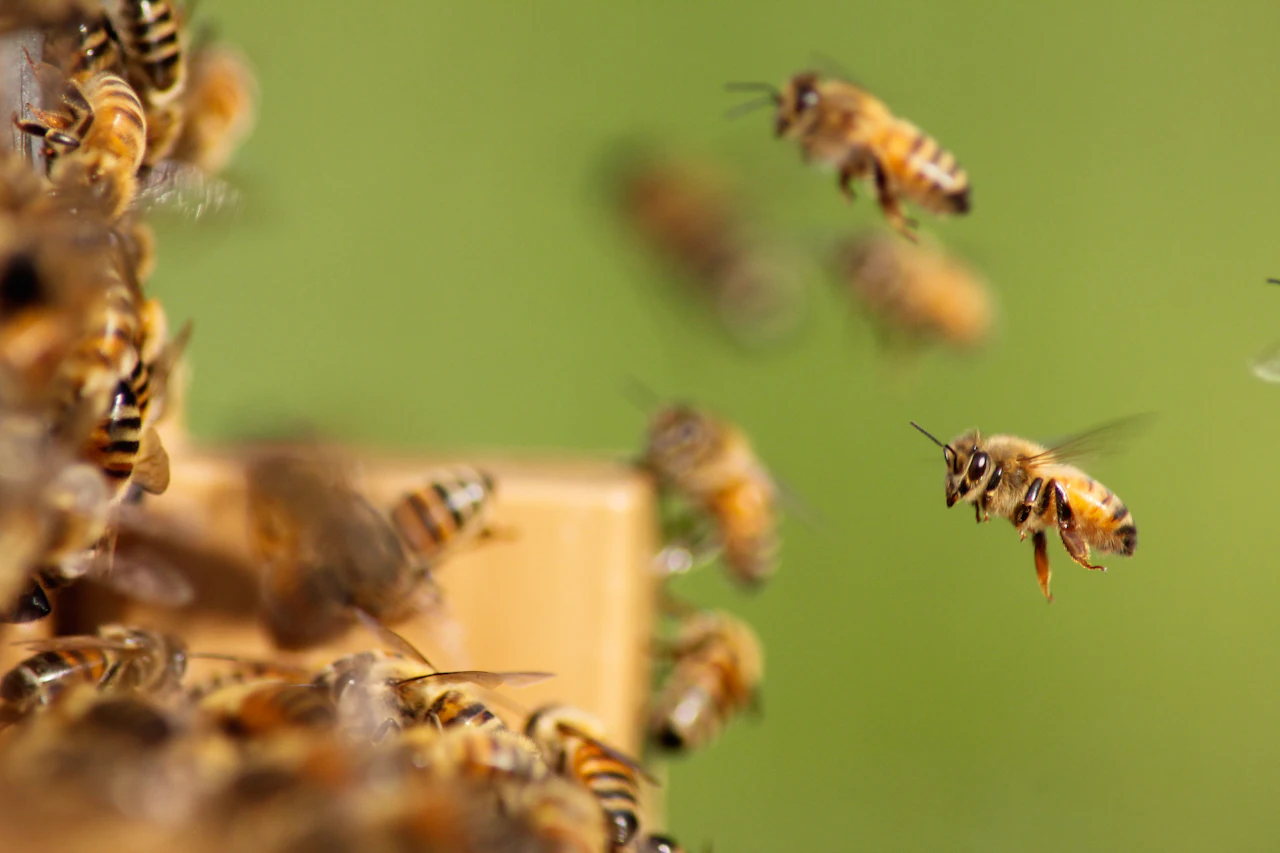
PestMan is the only UAE pest-control operator with a stated policy of LIVE RELOCATION for honey bee colonies wherever it is safely possible. Honey bees are pollinators essential to UAE agriculture and have protected status under municipal beekeeping initiatives — we work in partnership with local apiarists and Dubai Municipality apiary teams to relocate swarms to managed hives in Hatta, Al Ain and the Eastern Mangroves rather than killing them. The picture changes when the colony has built deep inside a wall void, an active hornet (oriental wasp) nest is threatening children, or an aggressive Africanised colony has taken over a chimney — those scenarios are genuine emergencies where targeted control protects life first. We respond to bee swarms within 2 hours during daylight, complete the relocation or removal in a single visit, repair the entry point so the same colony can't recolonise the same chimney or AC cavity, and back every job with a 6-month pest-free guarantee with unlimited free call-outs.
Sharjah
Serving Sharjah
Sharjah villas with older drainage often need targeted cockroach gel-baiting at multiple access points. We schedule industrial-area warehouse visits before opening hours to avoid disruption.
Removal and live relocation of bee swarms and established hives from UAE villas, hotels and gardens — plus targeted control of aggressive hornets and wasps. 6-month pest-free guarantee.
Field guide
Signs you have an infestation
What our technicians look for first when they arrive at a Sharjah property.
Constant low-frequency buzzing audible from inside a wall, ceiling or chimney
Bees consistently entering and exiting the same crack in the exterior wall throughout the day
A grape-shaped cluster of bees suddenly appearing on a tree branch, balcony rail or AC unit
Children or guests reporting stings while gardening, near the BBQ area or by the pool
Dark honey or wax stains seeping through interior plasterboard near a ceiling or wall void
Avoid leaving sugary drinks, ripe fruit and BBQ residue outside; cover bins tightly — wasps and hornets are drawn to protein and sugar
Trim back overgrown hedges and palm fronds touching the villa eaves — these are scout-bee landing spots
Coverage in Sharjah
Bee & Wasp Control across Sharjah
Same-day bee & wasp control call-outs across Sharjah's main communities.
Al Nahda
Al Majaz
Al Khan
Muwailih
Al Qasimia
Al Taawun
Industrial Area
Al Saja'a
Bu Tina
University City
FAQs
Frequently asked questions
The questions Sharjah customers ask most before booking bee & wasp control.
Will you kill the bees or relocate them — and how do you decide?
We prefer relocating bees to safe areas rather than killing them. Live relocation is our default for honey bee swarms (the temporary grape-cluster on a branch or rail) and for most accessible wall-void hives — we partner with managed apiaries in Hatta, Al Ain and the Eastern Mangroves where the queen and colony continue producing UAE honey and pollinating local agriculture. We move to lethal control only in three specific scenarios: (1) the colony is inside an inaccessible structural cavity where physical cutout would require demolishing a load-bearing wall; (2) the species is oriental hornet, paper wasp, or carpenter bee — these are not honey bees and have no conservation case; (3) an Africanised or aggressive colony is actively stinging children, pets or pool guests and immediate safety requires control. The decision is yours after we explain what's possible; about 75% of our bee calls end in successful live relocation.
There's a grape-shaped cluster of bees on my balcony rail — is that different from a hive in the wall?
Yes, completely different — and the difference dictates how urgently to act. A grape-cluster swarm on a rail, branch or AC unit is a temporary bivouac: the queen has left her original hive with 5,000–20,000 workers in search of a new permanent home, and the cluster lasts 24–72 hours while scout bees survey nearby cavities. This is the EASIEST scenario to relocate — we vacuum-capture the cluster intact and transport the colony to an apiary the same afternoon, with zero structural damage to your property. If we don't catch them in that window, they'll move into a chimney, AC cavity or wall void of your house or your neighbour's — which is a much harder cutout job. Call us immediately if you see this; we treat swarm clusters as a 2-hour daylight response priority because the window is short.
If we relocate the bees, will the same colony come back to my chimney or AC unit?
Not the same colony — once relocated to a managed apiary 80+ km away, the queen and her workers re-orient to their new location and almost never return. The risk you should care about is a DIFFERENT swarm choosing the same cavity next spring because the scent of old wax, honey and pheromone marker still lingers there. That's why our standard protocol always includes cleaning out residual wax and honey, filling the cavity with closed-cell foam, and screening the entry point with stainless mesh. Without that cleanup-and-seal step the same chimney is statistically likely to attract a new swarm within 12–18 months because honey bee scouts actively prefer cavities that other bees have previously occupied. The 6-month warranty covers any return of bees to the treated site; the bee-proofing extends the practical protection for years.
How close is too close for my children and pool — and should I evacuate during the removal?
For an undisturbed honey bee hive 5 metres from the pool or children's play area is the practical safety distance — bees foraging in and out of their entry don't perceive human movement at that range as a threat. For an oriental hornet nest the distance triples to 15 metres because hornets have a larger defensive perimeter. During the actual removal, full evacuation of the affected side of the villa is required for the 2-hour window: bees become agitated when smoked and a small percentage will fly aggressively, regardless of species. Children, elderly relatives, anyone with a known sting allergy and outdoor pets should be moved to the opposite side of the property or to a neighbour's house. After the all-clear and a 48-hour stragglers window, the area is safer than before because the colony — not just the visible bees — is gone.
I've heard about Africanised or aggressive bee colonies — are they in the UAE and how do you handle them?
Pure Africanised honey bee (Apis mellifera scutellata) is not officially established in the UAE. However, we periodically encounter hybridised colonies behaving with unusually elevated defensiveness — likely from imported swarms via shipping, livestock transport from East Africa, or feral colonies that have crossed with imported genetic lines. The behavioural signature is recognisable: the colony deploys defenders within seconds of the slightest vibration, pursues humans 50+ metres from the hive (versus 5–10 m for normal European honey bees), and stings repeatedly without provocation. For these colonies live relocation is too dangerous to neighbours and our technicians, so we apply targeted lethal control at dawn or dusk when defenders are inside, with full bee-suit protection, neighbour notification and a coordinated evacuation zone. We then complete the standard cavity cleanup and bee-proofing. About 1 in 30 of our honey bee calls turns out to be a defensive colony of this type.
Do I need to leave my home during the bee removal, and how long for?
Yes — for the active removal window, which is typically 90 minutes to 3 hours depending on whether it's a swarm capture (faster) or a wall-void cutout (longer). The reason is twofold: bees become defensive when smoked, and even with a successful relocation, a small percentage of foragers return to the original entry over the following 48 hours and can sting bystanders. Practical advice: book the appointment for a morning window, drop children at school or a relative's, walk the dog elsewhere, and use the time for a coffee at a nearby café. We message you when the colony is in the transport box and the area is safe to return to. Allergic family members and infants should stay away for the full first day. Hotels and schools usually keep the affected wing closed for half a day; the cost-benefit of a single half-day closure versus an ongoing sting risk is always in favour of removal.
How do I tell whether what I have is bees, wasps or oriental hornets — and does PestMan handle all three?
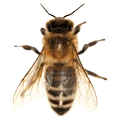
Yes — we handle all three but the treatment philosophy differs. Honey bees are 12–15 mm, fuzzy/hairy with golden-brown banding, return to the same entry hole all day, and produce wax and honey in the cavity — these we relocate live where possible. Paper wasps (Polistes) are slender 15–25 mm with smooth black-and-yellow bodies and build open umbrella-shaped paper nests under eaves and pergola beams — these we control with a targeted dusk treatment of the nest, no relocation. Oriental hornets (Vespa orientalis) are larger 25–35 mm with reddish-brown bodies and a bright yellow band — these are aggressive defenders with extremely painful stings that frequently cause anaphylaxis; we treat lethally as a standard emergency. The fastest way to confirm species is to send us a phone photo via WhatsApp — we'll identify within minutes and quote the correct service. Mistaking a wasp nest for a beehive (a common error) leads to wasted time on relocation attempts that can never succeed.
What's PestMan's relationship with Dubai Municipality and the UAE beekeeping community?
We operate within the framework of the Dubai Municipality apiculture initiative and similar Sharjah and Abu Dhabi programmes that promote the establishment of UAE beekeeping and the protection of pollinator populations. Our relocated colonies are transferred to certified partner apiaries in Hatta, Al Ain, the Eastern Mangroves and Liwa — small-scale beekeepers and a few commercial operations producing certified UAE honey under government quality standards. We maintain logged transfer records of every relocated swarm (date, original location, receiving apiary) which we can provide for hotels and corporate clients reporting under ESG and sustainability frameworks. This relationship is also why we can offer live relocation as a standard service rather than a premium add-on: the cost is offset by the apiary's value in receiving healthy queens, especially during the March–May swarming season when local apiaries actively want new genetic stock.
Need help today?
We're one call from your door.
Free quote in 30 minutes. Same-day visits across Dubai, Sharjah, Abu Dhabi & every other emirate.