PestMan handles tick control in Dubai with approval from Dubai Municipality. Free quote in 30 minutes, same-day visits across the emirate, and a real warranty on every treatment.
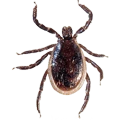
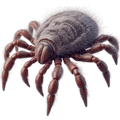
If you own a dog in Dubai or Sharjah, the brown dog tick (Rhipicephalus sanguineus) is the only tick species you're realistically going to encounter — and it dominates UAE residential settings completely. Unlike most ticks worldwide, this species can complete its entire lifecycle indoors, which means a single infested dog can seed a villa with hundreds of eggs hiding in skirting boards, dog beds, kennel corners, sofa joints and garage shelving. The disease load is serious: it carries canine ehrlichiosis, babesiosis and anaplasmosis (all of which can be fatal to dogs without urgent vet care), and occasionally transmits Mediterranean spotted fever to humans. The biggest mistake we see is owners spraying the dog with a tick wash, declaring victory, and ignoring the property — where eggs and nymphs are already established and will reinfest the dog in 14–21 days. PestMan runs tick control as a partnership service: full property survey of kennels, bedding, garage and garden borders; residual acaricide spray and IGR larvicide; bedding deep-clean protocol; coordinated timing with your vet's tick preventative. All backed by a 6-month pest-free guarantee with two follow-up visits to break the egg-hatch cycle.
Dubai
Serving Dubai
Most Dubai apartments are treated in a single 45-minute visit. High-rise jobs in JLT, Marina and Business Bay are coordinated with building management to bypass NOC delays.
Brown dog ticks that infest UAE villas with pets, carrying babesiosis, ehrlichiosis and Mediterranean spotted fever. 6-month treatment with vet coordination.
Field guide
Signs you have an infestation
What our technicians look for first when they arrive at a Dubai property.
Live ticks attached to your dog, especially behind ears and between toes
Dog scratching, head shaking or sudden lethargy beyond normal heat fatigue
Small dark dots on light-coloured fabric (dog bed, sofa, car seat) — engorged females after a meal
Ticks crawling up walls and door frames near the dog's resting spots
Brown egg masses (looks like tiny coffee granules) in cracks behind the kennel or sofa
Pale gums, bloody nose or fatigue in the dog — possible tick-borne disease
Tick bites on humans showing as a small red spot with a darker centre
Unexplained fever, fatigue or flu-like aches in pets or human household members within 1–3 weeks of a tick bite — possible tick-borne illness
How we treat & prevent
Our approach in Dubai
Treatment approach
Full property survey: kennel, dog bedding, garage, garden borders, fence lines and indoor resting zones
Residual acaricide spray applied to skirting boards, cracks and outdoor dog areas
IGR larvicide to prevent nymphs maturing into reproductive adults
Deep clean of dog beds, kennel and crate with hot wash + steam sterilisation
Outdoor perimeter treatment along walls, gates and fence lines where ticks ambush
Coordination with your vet's tick preventative timing (spot-on, oral, collar)
Two follow-up visits at day 14 and day 28 to catch newly hatched larvae
UAE-specific prevention
Year-round vet-prescribed tick preventative is non-negotiable for any dog in UAE — spot-on, oral or long-acting collar
Inspect your dog's coat after every park, beach or off-leash walk — especially behind ears, between toes and around the collar
Wash dog bedding weekly at 60°C+ for the entire ownership period, not just during outbreaks
Trim grass and vegetation along garden borders short — adult ticks ambush from leaf tips
Avoid boarding kennels with no published tick-control protocol; ask to see their records
Don't let your dog rest on visiting dogs' bedding (e.g. at friends' villas) without checking first
Coverage in Dubai
Tick Control across Dubai
Same-day tick control call-outs across Dubai's main communities.
Downtown Dubai
Dubai Marina
JBR
Jumeirah
Business Bay
JVC
Mirdif
Al Barsha
Al Quoz
Deira
Bur Dubai
International City
Discovery Gardens
FAQs
Frequently asked questions
The questions Dubai customers ask most before booking tick control.
My dog came home from the park covered in ticks — what's my first move?
Three things in order. First, do not bring the dog inside until you've done a full coat check on the lawn or driveway — ticks dropped on the carpet will scatter and start a household infestation. Second, manually remove visible ticks with fine-tipped tweezers, grasping at the skin and pulling straight up (don't twist, burn or smother). Third, call your vet within 24 hours for a babesia/ehrlichia smear test and a fast-acting preventative — and then call us to inspect the property before the female ticks you missed lay 2,000 eggs in the sofa. The window between exposure and indoor establishment is 48–72 hours.
Can I just remove the ticks myself with tweezers and skip professional treatment?
You can remove the ticks you see — but those are 5% of the problem. A single fed female brown dog tick that drops off lays 1,000–3,000 eggs into cracks, kennels and bedding, and you'll never see those eggs without a 30x lens. Three weeks later the eggs hatch into seed ticks (0.5 mm, six legs, almost invisible on dark fur) and within 14 days they're back on your dog as nymphs. Without property treatment you're stuck in a 4–6 week reinfestation loop forever. Tweezer removal is excellent for individual ticks; it doesn't address the established indoor population.
Is tick paralysis a real risk for dogs in UAE?
Tick paralysis from the brown dog tick is rare in UAE but not unheard of — it happens when a female tick attached to the dog's head or neck releases a neurotoxin in her saliva over 4–7 days of feeding. Signs are rapidly progressing rear-leg weakness, difficulty swallowing and eventually breathing difficulty. The fix is removal of the tick, after which most dogs recover fully within 24–48 hours. The bigger UAE concern is actually tick-borne disease (babesiosis, ehrlichiosis) which is far more common and frequently fatal without urgent vet care. Both risks are eliminated by keeping the dog on year-round vet-prescribed preventative.
How long does the property treatment actually last?
The residual acaricide gives 12–16 weeks of active kill on treated surfaces, and the IGR component stops larvae maturing for 6 months. Combined, you get the 180-day pest-free guarantee window — provided two conditions are met: (1) the dog stays on a vet-prescribed tick preventative throughout, and (2) you don't reintroduce ticks via a boarded dog, visiting dog or rural trip without inspection. If you skip either, ticks circle back. Our two follow-up visits at day 14 and day 28 specifically catch the larvae that hatch from eggs already laid before treatment started — that's the biological cycle we have to break.
Do my family and I need to vacate during the application?
Not full vacation — the products are municipality-approved residual sprays, not toxic fogs. We do ask that humans and pets stay out of the room being actively sprayed (we work room by room, taking about 20 minutes per area) and that everyone is out of the garden borders we're treating outside. After the surface dries (typically 60–90 minutes per zone), the treated area is safe to re-enter. Pets must be off treated grass for 4 hours specifically because they lick their paws and we want zero ingestion. We can coordinate with your dog walker or kennel for the day to make this seamless.
Tick collar, spot-on, oral tablet — which one and do I still need property treatment?
All three modern formulations (Bravecto, Nexgard, Seresto, Frontline Plus, etc.) work well on the dog itself — your vet will pick based on your dog's weight, lifestyle and any allergies. None of them prevent eggs and larvae establishing in the property; they only kill ticks once attached to the dog. So the answer is: yes you need both. The dog's preventative kills ticks that climb onto him from any source; property treatment kills the eggs and nymphs already established in your home before they reach the dog. Skipping property treatment means the dog's preventative is a permanent ongoing battle. Doing both together breaks the cycle in 4–6 weeks.
How do I properly clean the kennel and dog bed after treatment?
Strip every soft item from the kennel/crate — bedding, blankets, soft toys, fabric covers — and hot-wash at 60°C minimum, then tumble dry on high heat for at least 45 minutes. Ticks die at 54°C, so anything washed under that just got a swim. The kennel structure itself gets wiped down with hot soapy water followed by a vinegar-water solution (1:3) to dissolve any egg-glue residue. Steam-clean the corners and joints with a domestic steamer for 30 seconds per spot. Replace the dog bed cover after week 4 if eggs were heavily present — they're cheap insurance compared to a reinfestation. Repeat the wash cycle at day 7 to catch larvae that emerged after the first round.
My neighbour has dogs but won't treat their villa — am I doomed to reinfestation?
Brown dog tick doesn't travel well between properties on its own — it's not like German cockroaches in shared plumbing. The realistic neighbour-related risk is your dog playing in their garden or boarding with their pack. As long as your dog has a vet-prescribed preventative active in his system, ticks that climb on from a neighbour's grass die before they can lay eggs, and your property treatment kills any larvae that drop. We do a perimeter spray along your shared wall as part of the standard service for added insurance. The exception is wild dogs or stray cats crossing both properties — if your area has high stray traffic, we'll discuss a maintenance plan with longer cycles.
Need help today?
We're one call from your door.
Free quote in 30 minutes. Same-day visits across Dubai, Sharjah, Abu Dhabi & every other emirate.